I hadn’t watched the Traveler pilot since last summer when I sat down last week to catch up on what I’d missed thus far. By all accounts (Those being that of my parents, who had been watching the series weekly), the series appeared to be on track for decent drama, so I figured that catching up might not be a bad idea. In the end, I’m quite glad I did: Traveler has developed into a succinct, well-made serial drama that should be garnering better ratings than its current averages. The series has managed to pull together its disparate parts into something cohesive and strong, and after last week’s “cliffhanger” ending it is clear that this story is only beginning. And, well, I think people might want to tune in for the end. Traveler has done a number of things right, and they’ve all contributed to its serial success.
Consistency of Character
Jay is the lawyer, always thinking of lawyer-like things. Tyler is the trust fund kid with parental issues, and has never wavered from this fact with his paranoid and impulsive behaviour. The FBI agents are even getting their own characters, but they’re simple and not complex for the sake of being complex. The characters are not full of depth, but for what this series is trying to put together there is just the right level of consistency for the series to work. While Jay’s girlfriend has yet to become much more than a cliché, at least they’re not attempting to pass her off as anything more.
Recently, major entertainment websites and print media have begun to receive their DVD Screeners for the fall’s new shows. With only a glimpse of the shows being revealed at the Upfronts nearly four weeks ago, journalists are now getting a chance to see the entire episode that convinced a major network to give that show a spot on it schedule. However, they can’t tell you what they really think about them: based on Screener regulations, they are only able to offer a “preview” of the pilots. There will be no reviewing of this fall’s new shows as long as the Screener people get their way.
Now, while I haven’t quite been able to find any documented reason for why this is, allow me to speculate. I believe that the studios are afraid of the power that journalists wield when deciding whether a show is good or not. They fear that critics might be, well, critical of the work that they’ve done, and that said criticism will reduce the potential of that show in the fall. It’s a win-win for the studios, they believe, if all people can offer is vague commentary on the episode. Take for example TheTVAddict’s “preview” of Sarah Connor Chronicles (Pictured), FOX’s midseason entry:
THE GOOD: The action packed pilot had this TV Addict on the edge of his seat for the entire hour.
THE BAD: How exactly are they going to keep the action quotient up each and every week? If the season finale of HEROES taught us anything, it’s that with great power comes great respon… err, I mean – it’s that television budgets aren’t very conducive to an action packed weekly series.
For studios, they see this as fantastic: the good comment does little but help the show, and the writer isn’t able to offer enough substantiation for their complaint for it to feel definitive in the eyes of viewers (And let’s face it, that’s not even really a bad thing. Just a cautionary warning). These studios believe that they’ve found a way to protect their pilots from the savagery of the internet.
But what differentiates a preview from a review? Does it mean that you can’t be negative, or that negative comments are frowned upon? Or can you not discuss any details of the pilot? Or are you unable to offer examples of anything? And are people even paying attention to these guidelines? Well, let’s find take a look and find out just what that difference is.
[In Week Two of Cultural Learnings’ 59th Annual Emmy Awards Nominations Preview, we’re looking at possible contenders for the Supporting Actress awards in both drama and comedy. Today, we present our sixth set of candidates. For last week’s Supporting Actor candidates, and an index of all candidates, Click Here]
Supporting Actress in a Drama
Adrianne Palicki (Tyra)
Friday Night Lights
In a sea of supporting actress candidates, selecting Adrianne Palicki for Friday Night Lights was difficult. Much of my praise for Zach Gilford last week actually doesn’t apply to Palicki at all: his performance is about subtlety and teenage anxiety, whereas Tyra Collette is brash and acts far closer to Palicki’s real age of 24. However, what I realized as the season went on is that Tyra is a character with a great deal of depth beyond her apparent surroundings. While early season storylines had her sleeping with young oil executives (Which was sketchy for a 17-year old and never quite fit), she developed into a much stronger character as the season wore on. She may have been that bad girl who was on the wrong side of the tracks, but by midseason she was the girl who acted tough because her life was falling apart around her. While she might not excel at playing a teenager, Adrianne Palicki excelled at playing a girl who faced trouble with her head held high until she just couldn’t handle it anymore. And that performance is worthy of Emmy attention.
Tyra is the requisite bad girl, in direct contrast to Minka Kelly’s sugar sweet Lyla Garrity. She’s the bad influence on the coach’s daughter Julie, the love interest for resident bad boy Tim Riggins, the object of the nerdy Landry’s desires, and the special project for Guidance Counselor Tami Taylor. However, somehow Palicki managed to make each of these relationships incredibly compelling. Her scenes with Julie were playful, being just subversive enough without being deplorable. Her relationship with Riggins is complicated, with her feelings being varied and wavering at a realistic pace. Her scenes with Landry provided some great comedy late in the season, and working with Tami showed the bad girl side of Tyra breaking down.
And yet, I think the scene that I most enjoyed was Tyra heading into Jason Street’s hospital room with a bottle of liquor and shooting the shit while getting plastered. She was there to make a statement, screw with Lyla’s head, and yet she never quite took it to the level of outright “I’m going to screw your boyfriend”. She was this bad girl, so capable of being so, and yet she had some sense of a moral guideline. That moral guideline became even more clear as her academic future and her strained relationship with her mother became clear, including her battles with her boyfriends. Suddenly, her early season actions gained context they did not have before, and the result was that Palicki’s performance seemed that much better in hindsight. She is no household name, but Palicki crafted a character in a way that is worthy of Emmy consideration.
Episode Selection:“Mud Bowl” (Aired March 28th, 2007)
I don’t want to call this episode Emmy bait, because that takes away from Adrianne’s strong performance…but it was Emmy bait. Waiting for Landry at a fast food joint in the pouring rain, Tyra encounters a rather creepy male. As Landry is late, Tyra gets up to leave and is followed by the man who attempts to rape her. She fights him off with a cigarette lighter, and falls into Landry’s arms as he arrives. Palicki’s performance in the episode is incredibly powerful in what could have been a tough storyline to pull off, and she’s also great in the rest of the episode as she warms up to Landry and all of his charm. To see this “bad girl” devolve into a mess following this traumatic situation was one of those moments where you realized how real Friday Night Lights was, and Palicki’s portrayal of Tyra is what makes that possible in this episode. But since that scene can’t be watched, here’s a scene of Tyra interacting with Matt and Landry.
A lot of what I discussed about Michael Urie’s performance in Ugly Betty goes as well for Becki Newton. She was also introduced as a catty coworker who would attack Betty mercilessly, and was as one-dimensionally funny as a character could get early in the season. However, like Marc, Amanda grew throughout the season into someone more caring, compassionate, fragile. Perhaps realizing that Betty wasn’t herself interesting enough to carry every storyline, B Plots began going the way of Marc and Amanda, and the result was three-dimensional characters that stood on their own accord. While she might not be a big name like Vanessa Williams, Becki Newton was always up to the task of being a vicious critic when necessary while always being able to show Amanda’s more sensitive side. That ability to balance conniving and concerned, caring and villainous, puts Newton into consideration for an Emmy Award.
Judy Greer is perhaps best known to television comedy fans for her stint as receptionist Kitty on Arrested Development. Rob Thomas is best known for creating Veronica Mars, the beloved UPN/The CW drama that was recently canceled. Combining these two elements seems like good science, and apparently all parties think so. A last-minute addition to the ABC Pilot lineup, “Miss/Guided” was seeking guidance and has found it in Thomas, who will lead Greer and Co. as showrunner starting at midseason according to E! Online.
This means a few things: first, yes, Veronica Mars is definitely canceled. However, I think that fans (and everyone else) should look on the bright side knowing that Rob Thomas is still in television. While I think that he has yet to prove himself a consistent showrunner over multiple seasons, and the fact that he hasn’t created the show is certainly going to make for a different experience, the first season of Veronica Mars was some of the most exceptional television of the decade. If Thomas can develop his vision and keep it from spiraling out of control, I believe that he is the right person for this job.
Second, I’m now that much more excited for Miss/Guided. I was happy to see it picked up, considering Judy Greer is both very engaging and very funny, but now the series has a great deal of potential. The show is certainly not all that original, actually seeming to play just a little bit like Ugly Betty in a public school, but I think that this type of fish out of water story is exactly the type of thing that Thomas is good at capturing. The best parts of Veronica Mars were when she was a total outcast, struggling not to fit in but to survive not fitting in. Much as Veronica developed her own way of doing that, I believe that Greer’s Becky Freeley can do the same.
So, while it is perhaps no consolation for losing Veronica Mars, I look forward to seeing what he is able to cook up for Miss/Guided. Perhaps with a creative resurgence the sitcom might actually get a timeslot confirmed; if it replaces Cavemen (Which better not succeed), I shall be most pleased.
Also of Note: Christina Applegate comedy “Sam I Am” is now listed as “Untitled” on ABC’s fall preview. Looks like changes are afoot on more shows than one over at ABC.
[In Week Two of Cultural Learnings’ 59th Annual Emmy Awards Nominations Preview, we’re looking at possible contenders for the Supporting Actress awards in both drama and comedy. Today, we present our fifth set of candidates. For last week’s Supporting Actor candidates, and an index of all candidates, Click Here]
Supporting Actress in a Drama
Patricia Wettig (Holly Harper)
Brothers & Sisters
Fans of FOX’s Prison Break will know Patricia Wettig from her stint as (Vice-)President Reynolds on the show’s first season before she mysteriously disappeared in its second, returning only for a brief cameo. Well, for those fans who might not be so interested in primetime family dramas and who skipped ABC’s Brothers & Sisters, it was the reason why she was absent. With her husband Ken Olin (A prolific director/producer on Alias) producing the ABC series, Wettig was drawn away from her presidential role for one somewhat different. And, while I’m sure it mucked things up over at Prison Break, Wettig made the right decision in the end. In Holly Harper, Wettig has a character with emotional depth beyond her introduction. Beginning as a volatile plot device from the Walker family’s departed patriarch’s past, Holly has since developed into an honest-to-goodness part of this ensemble cast. While some of the other supporting performances were perhaps more showy (Mainly Rachel Griffith’s turn), Wettig brought to Holly a sense of loss and independence worthy of Emmy contention.
Holly Harper was the other woman, the one that Nora Walker knew existed and yet didn’t believe was ever a real problem. The key theme of the season was Nora dealing with her husband’s past haunting her even after his death, and Holly was a big part of this. As she became an inheritor, and as she bought herself into the family business, Holly was a thorn in Nora’s side in a real fashion. However, Holly was rarely out to get Nora in the beginning. Wettig brought to the role a sense that she was willing to be civil, willing to be honest, willing to let things slide. Then, of course, things hit the roof and Nora couldn’t take it anymore.
Their tension was palpable, and it drove the show forward. As Holly battled with Sarah and Nora, she was often somewhat vindictive and it would be easy for Wettig to fall into that pattern. However, once Holly’s daughter Rebecca entered the picture, Wettig was given a more emotional side. We began to see the life she led without having to relate to this family, the life as the other woman with a daughter and a life to live. It is easy to immediately condemn the other woman, but I found myself warming to Holly by season’s end. Wettig brought to the role a sense of honesty, a knowledge of her sins and yet an acknowledgement of needing to move on from it. From beginning to end in her series run, Patricia Wettig embodied Holly Harper in a way that she could never have achieved with Prison Break’s cold-hearted president. Not only did Wettig make perhaps the best career move of the year, but she also delivered a performance worthy of Emmy consideration.
Episode Selection: “Grapes of Wrath” (Aired May 6th, 2007)
Holly is at her most vicious here, reeling from the news that her daughter has moved in with the Walkers and the tension between her and Nora is most certainly at a fever pitch. Wettig has a lot of fun seducing Nora’s date for the weekend, her creepy writing teacher, but the real kicker comes from an end of episode food fight that is both funny and yet evolves into something much more substantial. Holly breaks down after the fight, realizing that she still misses William (Nora’s husband, her lover). That breakdown is the first time I really looked at Wettig for this award, and I think it convinced me she deserved it. It puts into context Holly’s actions, Holly’s inability to move on, just as it did Nora’s inability to move on before she put William behind her at some point earlier. Actually, Holly’s actually better at moving on than Nora is. And Wettig makes this very clear, matching Sally Field line for line and delivering an Emmy-worthy performance.
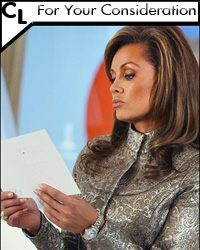
There is something to be said for an actress finally finding the right role for them. Vanessa Williams has jumped around, struggling to find her role in the television and film universe. Outside of appearances in films such as Soul Food or Shaft, or her short-lived runs on Boomtown or South Beach (Which existed, believe it or not), she has never found a niche in the acting world. As a result, most people know her best from performing ‘Colours of the Wind’ in Disney’s Pocahontas and her other singing accolades. However, Williams is not happy just being another Pebo Brison; she appears to have been waiting for the right role to finally come along. And, well, come along it has: as the scheming Wilhelmina Slater, Williams has elevated her game with a conniving and devious performance that skirts the line between villain and hero so well that I’m still not sure where I stand. However, either way, Vanessa Williams has finally found the right role, and it is one worthy of Emmy Awards attention.
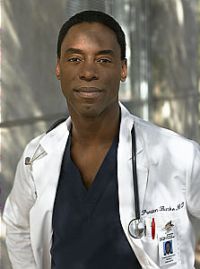
When we last left ABC’s Grey’s Anatomy, Dr. Preston Burke had left his fiance at the altar and had moved out of their shared apartment. As the source of a great deal of controversy over the past year thanks to the use of a hateful slur against gay castmate T.R. Knight, actor Isaiah Washington‘s job was often in jeopardy in the eyes of television media, but Shonda Rhimes always stuck by her star. With the season over, however, that has changed: as of this moment, Isaiah Washington has been fired from Grey’s Anatomy.
There is something fascinating about this whole saga, and I think that it goes beyond the question of homosexual actors in hollywood. Over the past year it seems like “Coming Out” is becoming standard practice: Lance Bass, Neil Patrick Harris, T.R. Knight and most recently David Hyde Pierce have all done so. T.R. Knight, however, was the only one to really be forced out of the closet thanks to a tabloid story, which makes him the most distinctive case. Despite a much more open society, it seems being gay is still seen as an oddity, as something that (when revealed) changes everything. Washington’s use of the ‘f-word’ was certainly an instigative act that resulted in him going into counseling and taping a PSA on the subject of equality.
The media has beaten this angle of the story to death, although not unjustly so. Washington’s statement was hurtful, juvenile, and unacceptable, and if this is punishment for that act then there is reason to be pleased with this retribution. However, I think that Washington’s problems did not stop there, and that as an individual his actions AFTER the event have gone somewhat unanalyzed. If you are Shonda Rhimes, how do you handle an actor whose actions off-screen affect his on-screen character to the point of overshadowing the show itself? And, if you’re that actor, how could you possibly return to work in that scenario? It’s an important question, and one that has been raised in the past. And one that Cultural Learnings will now analyze.
[In Week Two of Cultural Learnings’ 59th Annual Emmy Awards Nominations Preview, we’re looking at possible contenders for the Supporting Actress awards in both drama and comedy. Today, we present our first set of candidates. For last week’s Supporting Actor candidates, and an index of all candidates, Click Here]
Supporting Actress in a Drama
Elizabeth Mitchell (Juliet)
Lost
We first met Elizabeth Mitchell’s Juliet at the beginning of season three, as she became Jack’s all-purpose wrangler if you will. She brought him sandwiches, she played him Bob Dylan-style video tapes in an attempt to seize control, and she assisted in surgeries despite only being a fertility specialist. Throughout that six-episode mini-arc, this was all we knew about Juliet. Mitchell’s portrayal was certainly strong, but the character was just another Other as far as we could tell. However, with “Not in Portland” (The first episode back from hiatus), Juliet was thrust into the centre of the Others’ history, and Mitchell was up to the task. Throughout the remainder of the season, she became an intricate and powerful part of this ensemble, and at season’s end she was still as complicated and engaging as ever. Much like Michael Emerson, Mitchell had an incredibly tough task ahead of her. And, like Emerson, she stepped up to the plate with a performance worthy of Emmy consideration.
Juliet could have been a fairly mediocre character in the wrong hands. She has been used as a disruptive influence in the relationship between Jack and Kate, and became “the other woman” to the castaways as well when Jack brought her back to camp following their adventures. And yet, Mitchell always managed to create a character that we outwardly liked, even when they were doing somewhat evil things. When we learned that she was still working for Ben as she took Sun to the medical hatch, we as viewers wanted it to be false, wanted there to be some kind of explanation. Mitchell’s portrayal made us want to like her, something that could have been difficult considering who the Others are.
This season of Lost was all about humanizing the Others, providing them a perspective on this island. Without performance like Mitchell’s, I think the Others might have remained faceless villains, incapable of becoming part of the show’s mythology. Juliet became someone we outwardly liked through a complex back story, a relatable situation trapped between two sides, and by never completely showing her cards. The show asked a lot of Mitchell, and she stepped up every single time. I was never bored with Juliet, and I’m not sure I will ever be. Elizabeth Mitchell is now an integral part of Lost’s ensemble, and her ability to weave Juliet into the show’s complicated storyline is Emmy worthy.
Episode Selection:“One of Us” (Aired April 11th, 2007)
Juliet’s second episode worth of back story, One of Us is a tumultuous journey through her time on the island, coinciding with her present struggle to become part of the culture at the beach. It is a fantastic portrayal from Mitchell that gives her a wide range of scenes that would pull any Emmy voter into her direction. She has so many that I had an incredibly tough time picking just one. Her nervousness before she heads to the island? Her breakdown after yet another woman dies during childbirth? Her smackdown of Sayid and Sawyer as she gather the medical equipment? All of them are noteworthy, but the one I must showcase is where she confronts Ben about his tumour. He had promised to cure her sister of cancer, and yet he has it himself: Juliet is unpleased, and Mitchell’s portrayal is honest and just fantastic. This is an acting tour de force, and it cannot be ignored.
I believe that one of the greatest disservices of this television season was the character homicide of Jan Levinson on NBC’s The Office. After three seasons worth of strong, subtle performance from Melora Hardin, she was turned into a boob joke and a serious case of the crazies. While it provided some comedy, sure, what was always entertaining about Jan was how she walked the line between neurotic mess and corporate role model. Her relationship with Michael was her trying something new, trying to find stability where there was none. If she was the comedic form of humpty dumpty, she had a great fall at the end of the season. But, I hope that Emmy voters will be able to remember how to put Melora Hardin’s subtle and entertaining comic performance back together when it is time to submit their ballots.
[In Week One of Cultural Learnings’ 59th Annual Emmy Awards Nominations Preview, we’re looking at possible contenders for the Supporting Actor awards in both comedy and drama. Today, we present our last, and seventh, set of candidates. Tomorrow, we’ll begin looking at Supporting Actresses. For all Supporting Actor candidates, Click Here]
Supporting Actor in a Drama
Terry O’Quinn (John Locke)
Lost
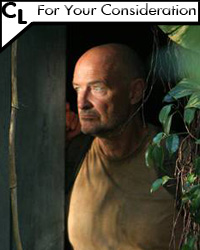
I’ve saved Terry O’Quinn until the end not because I don’t know what to say, but rather because it almost feels unnecessary to say it. After unjustly losing the Emmy two years ago, Terry O’Quinn has unfortunately gone unrecognized for his role as John Locke, and in a way it makes sense. The 2nd season wasn’t a big one for Locke, as he lacked a true defining moment. It was more of a general pattern, his obsession with the Hatch being a long, drawn out affair as opposed to a single emotional moment. However, I will make no excuses for the Emmys or any other awards show when it comes to the coming awards season. Because, when it comes to supporting performances, no character had a bigger episode this season than John Locke, and no actor stepped up to the plate like Terry O’Quinn. And for that, my friends, Terry O’Quinn deserves an Emmy.
This season, Locke was given the opportunity to finally reconnect with the island, the very thing that had so tempted him in the first season when he stumbled upon the hatch. Without that hatch to rely upon, Locke was asked to step up to the plate and lead his people after Eko’s untimely death. The result of this was Locke regaining his faith, of sorts, from Eko’s scripture-laden stick, and sending him on a journey to find the Flame Station, the Others’ compound, a certain submarine, a magic box, a gruesome task, a fateful journey, a mysterious encounter, a near fatal shooting, a visitor from his past, and a final plea to Jack to not allow outsiders to enter the sacred island he now calls home. That journey, taking place in the second portion of the season, hearkened back to the Season One Locke we knew and loved.
And O’Quinn was right back with it. Don’t call it a comeback for O’Quinn, though, because he was just as solid in the second season as he was here. However, the content of each season can’t be compared: whereas Locke became marginal in season two, he was the centre of attention in season three. And O’Quinn rose to the occasion, never backing down from a challenge and marking some memorable exchanges with Sayid, with Jack, and with the leader of the others, Ben. At all times, O’Quinn played Locke like the man of faith again, the man who believes when others don’t and, perhaps, might just be onto something. Lost wouldn’t be the same without Locke, and the Emmy Awards will not be the same without Terry O’Quinn. They made a mistake two years ago, and it’s time they made it up to him.
Episode Selection:“The Man From Tallahassee” (Aired March 21st, 2007)
In Season One, Terry O’Quinn should have won that emmy for Walkabout, the episode where we learned he had previously been in a wheelchair (One of the show’s best reveals, perhaps only topped by this season’s finale). In Season Two, O’Quinn was at his finest when sparring with Henry Gale, the prisoner in the hatch who we later learned was the leader of The Others. The Man from Tallahassee takes these two elements (Locke’s past paralyzation and his confrontations with Ben) and puts them into the same episode. The result is a philosophical and powerful hour of television that wraps itself around the island as a character, Locke’s journey, and most importantly: we finally learn how Locke lost the use of his legs. It is perhaps the final chapter in Locke’s journey, that final piece of the puzzle, and Terry O’Quinn knocked it out of the park. If this performance isn’t worthy of an Emmy, I don’t know what is.
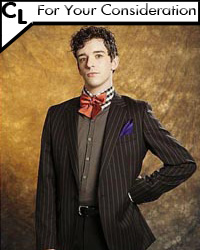
After watching the pilot for Ugly Betty, I felt that the show was far too vindictive. At that time, the various intricacies of the show were tossed aside in favour of fish out of water at its finest. The staff at Mode magazine were downright mean to hapless, unfortunately dressed Betty, and the result was that they all became instant villains from that moment onwards. And, thus, it is to the show’s credit that they managed to take these people and turn them into human beings who we empathize with on a weekly basis. One of those individuals is Wilhelmina’s flamboyant and biting secretary Marc, and Michael Urie’s portrayal of the character has managed to turn heartless into heartfelt. In a show that has transformed itself along with its titular heroine, Urie’s performance is absolutely part of that reason, and for it he deserved to be considered for an Emmy Award.
[In Week One of Cultural Learnings’ 59th Annual Emmy Awards Nominations Preview, we’re looking at possible contenders for the Supporting Actor awards in both comedy and drama. Today, we present our sixth set of candidates. For all candidates, Click Here]
Supporting Actor in a Comedy
Harve Presnell (Lew Steziak)
Andy Barker, P.I.
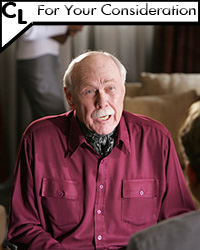
Not very many people watched Andy Barker P.I. It’s understandable: this midseason replacement came and went with only four airings in its timeslot on Thursday nights. Facing Grey’s Anatomy and CSI, the show failed to gain any ratings traction and never became a watercooler success. It is therefore somewhat unfortunate that the performance of Harve Presnell as Lew Steziak, a cranky old man who has long retired from the private eye business but finds himself being dragged back in. I don’t know what it is about Presnell’s performance, but he manages to capture jaded old man so very well without falling too far into senility. His performance is exactly what I’d like to become when I’m older: cantankerous, grumpy, angry, and yet aware that I could be less angry. And, while he’s certainly a long shot, I think that Presnell at least needs to be considered.
It’s not even that Presnell had a huge dramatic moment, or that he had the most hilarious line possible. He just had this way about him, this delivery, that continually brought something unique to this comedy. Although only airing for six episodes, the show created many unique characters who made up quite the team, but I think I’d most like to meet a real life Lew Steziak, in the flesh. I would put the performance up there with an acting master class by any means, but from a comic perspective I think Presnell brings just the right amount of everything to the role. And, well, I can’t really expect much better than that from a 74-year old, can I? Not likely.
Episode Selection: “The Lady Varnishes”
In this episode, perhaps the wittiest of the show’s takeoffs of old murder mystery films (The Lady Vanishes), this episode features Amy Sedaris as a one-legged (She has a wooden leg, which she varnishes) as a long lost love of Lew’s. It’s a cute episode, and Presnell is good in it with Ed Asner as his arch nemesis as well. However, Andy Barker isn’t big on the YouTube. So, head over to NBC.com to watch the complete episode, and enjoy this clip of Presnell from the hit musical “Paint Your Wagon”.
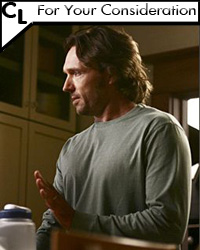
Brothers & Sisters is a show about an extended family dealing with the death of its patriarch and all of its other problems. This family is a bloody mess, and they all know it. As a result, I always feel the worst for those who chose to be a part of it. They married these people, and found that they had married into a crazy house. As a result, I also feel the most for these actors who have to react in a natural fashion to the problems that this situation creates. And, as a result, I have chosen to highlight John Pyper-Ferguson, who plays Sarah Walker’s husband Joe, for Emmy consideration.
If you turn on FOX tonight looking for a new one-hour installment of ‘On the Lot’, you’ll be disappointed. Thanks to extremely poor ratings, the series will be cut back to a single hour-long segment each week to air at 8pm on Tuesdays. Reruns of House, FOX’s only real rerunnable series, will air on Mondays for the foreseeable future ahead of returning reality series ‘Hell’s Kitchen’ (Debuting tonight at 9pm).
There is no official word on how Burnett and Co. are going to turn a results show into both a presentation and a result show, but magically it will happen. Personally, I think they should ditch the audience vote altogether and have the judges make the decisions based on screenings of the films. It would make a hell of a lot more sense, and get a lot better filmmakers in the process. We’ll find out tomorrow night, regardless, when ‘On the Lot’ returns to see if it can make a go of it.
ABC, FOX Pilots Find New Life
While Upfront season is long over, it appears that, according to The Hollywood Reporter, the drama is just beginning for two high-profile pilots from the creative teams behind two cult-favourites: Arrested Development’s Mitch Hurwitz and Battlestar Galactica’s David Eick.
Hurwitz is behind “The Thick of It”, a pilot about a congressman dealing with his new surroundings that is based on a British sitcom. The pilot found no traction at ABC, who went with Cavemen instead (Ugh), but it is apparently seeing life in both fans of Hurwitz’ work and fans of British comedy adaptations. Showtime, fans of Hurwitz ever since they attempted to acquire Arrested Development for a 4th season, want to work with him and even bid on the pilot before ABC nabbed it. NBC, meanwhile, is in the running since new boss Ben Silverman was responsible for The Office (US) and is therefore seeing a strong future for a similar adaptation. HBO is apparently also considering it.




 Supporting Actress in a Drama
 Supporting Actress in a Comedy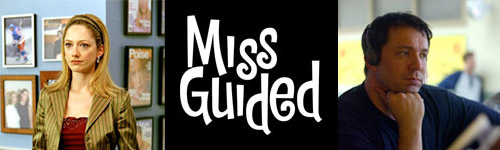
 Supporting Actress in a Drama
 Supporting Actress in a Comedy
 When we last left ABC’s Grey’s Anatomy, Dr. Preston Burke had left his fiance at the altar and had moved out of their shared apartment. As the source of a great deal of controversy over the past year thanks to the use of a hateful slur against gay castmate T.R. Knight, actor Isaiah Washington‘s job was often in jeopardy in the eyes of television media, but Shonda Rhimes always stuck by her star. With the season over, however, that has changed: as of this moment,
  Supporting Actress in a Drama
 Supporting Actress in a Comedy
 Supporting Actor in a Drama
 Supporting Actor in a Comedy
 Supporting Actor in a Comedy
 Supporting Actor in a Drama
 If you turn on FOX tonight looking for a new one-hour installment of ‘On the Lot’, you’ll be disappointed. Thanks to extremely poor ratings, the series will be cut back to a single hour-long segment each week to air at 8pm on Tuesdays. Reruns of House, FOX’s only real rerunnable series, will air on Mondays for the foreseeable future ahead of returning reality series ‘Hell’s Kitchen’ (Debuting tonight at 9pm).


 Cultural Learnings