
Entertainment Weekly recently released, to much reaction across the Interweb, a list of the top 25 television or film examples of science fiction from the past quarter century. In terms of films, it has your usual suspects: Blade Runner (Which I must admit I haven’t actually watched, although I did recently read the Philip K. Dick novel upon which it was based), The Matrix, E.T., Aliens, Star Trek II, etc. And, of course, there’s the classic TV shows: Doctor Who, The X-Files, Quantum Leap. However, there are three current TV shows which made the list: Heroes (#18), Lost (#11), and Battlestar Galactica (#2). And, although I’m sure that some legions of fans may disagree, it is my opinion that this is the correct order for these three shows.
 Heroes deserves to be on the list for being the most unabashedly science fiction-esque of the three series, and certainly moreso than anything else on television today. The world of superheroes, of comic book universes, is something that has remained mostly out of network television realm in recent years; you’d have to go back decades to find shows like Superman, Batman, the Green Lantern, etc. in order to find a time when these types of shows were on the airwaves. And, much as superheroes have changed over those years, so has their television shows. Heroes comes to the table with intriguing powers, apocalyptic futures, and a collection of characters which bend the normal rules of human logic to a wonderful degree. In essence, it’s science fiction television for a new generation.
 However, the problem is that Heroes hasn’t yet had time to really establish itself, so it is incapable of placing higher on this list. While it certainly has proven a sensation in this its first season, I’ve talked at length in the past as to whether it can continue on this path to success. Also, although I don’t think this is necessarily a bad thing, I don’t think the show has proven itself capable of balancing normal television drama with its science fiction elements. Any good piece of science fiction needs to be able to both present abnormal themes and events and, when the time calls for it, create human drama that remains relevant and real to the viewer. For me personally, outside of Company Man (Dealing with the backstory of the pictured Mr. Bennet), Heroes had yet to do it. This is why, for now, Heroes must remain on the lower end of the Science Fiction hierarchy. The future, however, could prove more kind to the series.
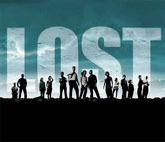 Lost, which breaks into the top half of EW’s list, is one of the reasons why Heroes was able to be made. For the first time since The X-Files, ABC’s hit drama was a hit with audiences despite its subtle leaning into the realm of science fiction. And, really, it was the subtlety brought to the table by producers J.J. Abrams and Damon Lindelof in the first season that paved the way for the show’s success, and the greenlighting of numerous Sci-Fi pilots the following year. While it is a show at its core about human drama and the plight of these castaways, this mystical island on which they live is in itself one of those characters. It is always looming, whether it’s in tangible forms (Smoke Monster) or in more metaphorical ones (The recent Magic Box, its power over Locke in the first season, etc.) It is an omnipresent force upon the show, one which remains an integral part of its success.
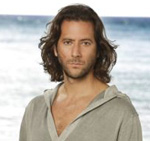 And yet, is it really Science Fiction? The show can go an entire episode without delving too far into the island, and then can spend an entire episode in some strange rift in time within Desmond’s (Pictured) flashback in “Flashes Before Your Eyes.” The show cannot be ranked too highly because, in many ways, it’s not dependent on its science fiction to be great drama. While Heroes spends a lot of time leaning on its superhero aspects to avoid going into real dramatic territory, Lost seems more than willing to stop and investigate its characters at a real level on a regular basis. For this reason, although its not pure science fiction, Lost remains the better example of the genre’s potential within the Television medium at this time.
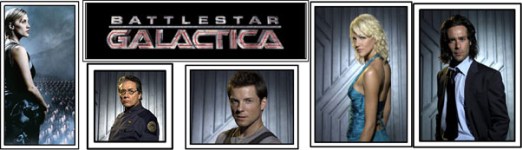
However, really, neither can hold a candle to Battlestar Galactica. It is, bar none, the best example of Science Fiction television of the past 25 years, and the reason for this is quite simple: it is a culturally relevant, character-driven drama which is constructed through science fiction genre principles. While Lost and Heroes have taken modern day scenarios and injected superpowers and mystical island powers into them as uncanny elements to their viewers, Battlestar Galactica is an alternate peoples, with an alternate mythology and religion, and with an alternate battle with the Cylons they created. This setup, found within the 1970s series of the same name, is pure science fiction; it’s a story of a future generation battling with technology we don’t understand and a threat we can only imagine.
The reason why Battlestar Galactica is so impressive is that it manages to take this concept and turn it into Peabody-award winning television that actually means something. While Lost is able to deal with character drama, Battlestar Galactica manages to do the same within a pure science fiction construct where it’s often not possible. The journey of the last of the human race, escaping from the Cylons who decimated their home planet, brings us into the world not of just humans, but of Laura Roslin, of Admiral Adama, of his son Lee or the rogue captain Starbuck. It becomes a story of political courage, electoral systems, class society, adultery, and contemporary issues that actually mean something. While the show is often at its best when it’s all about Cylon battles, the mythology of the Gods and the final five Cylon models, it remains powerful (in different ways) when dealing with more mundane issues.
When I took a course last year on Fantasy literature, we differentiated between two types of fantasy: high (Very Fantastical) and low (Minimally Fantastical). Really, we can do the same here. Because, as Wikipedia shows, Science Fiction is a very vague term, so dividing it helps. Lost is an example of low science fiction, although an incredibly good one. It’s science fiction elements make it stand out amongst other TV shows, other dramas, but don’t overpower the show’s other elements too much for viewers to turn away.
Heroes and Battlestar Galactica, on the other hand, are both examples of High Science Fiction. The difference is, as I think I’ve proven above, that Heroes hasn’t quite found its balance yet of dramatic elements and its superpowers. I don’t think that the show has built enough strong characters, something that you need to do within a medium not often used for its type of story. Its comic book writing, at times, can only go so far in creating a strong television drama. Battlestar Galactica has proven itself more than capable of creating those characters within a science fiction setting, and it is therefore the stronger example for future series. Hopefully, Heroes will look to Battlestar’s success and work on advancing to the next level in its second season.
In the end, Battlestar Galactica is the most influential science fiction television show on the air today because it manages to be a relatable and powerful drama even within its crazy cylon-infested universe. Lost can never reach that level, but is the best example of subtle science fiction in years. And, while shooting for the stars if you will, Heroes has yet to prove itself. It should be interesting, even ten years down the line, which of these shows will make the next such list, and whether their rankings will change. Will Heroes go on to become a powerful emotional drama, breaking down barriers for Science Fiction programming? Will Lost be remembered as a five-season epic or as a long-drawn out mess as the X-Files became? And, will future generations get to appreciate the genius of Battlestar Galactica, or will millions continue to ignore the show just for being on cable?
Well, if Science Fiction has taught me anything, it’s that the impossible is possible. So, I guess we’ll just have to wait and see.


 Cultural Learnings
I don’t have a problem with Galactica being ahead of Lost and Heroes – I have a problem with it being ranked as high as #2 on this list. As good as the show might be, EW puts “pop culture legacy” as one of their key criteria for their ranking system, and to suggest that Galactica – a cult show if there ever was one – deserves to be ranked ahead of The X-Files, Blade Runner, and all Star Trek on that criteria rings very, very hollow.
Give me another 10 years to see if Galactica turns from a cult show into a cult classic and then we’ll talk about it deserving a spot that high.
I’m not even sure I’d call BSG scifi at all, based on the finale. It’s outed itself as pure religious allegory with scifi decorations. It’s Harry Potter and the Secret of the Cylons and if it’s scifi, it’s definitely way out there on the fringes. Spaceships and Robots aren’t enough – or we’d call Star Wars science fiction, rather than fantasy.