
I had said before that I would be discussing Studio 60 on the Sunset Strip in comparison to 30 Rock, and I will be…but not to the extent I was before. I didn’t want this to turn this into a question of whether 30 Rock or Studio 60 is the better series, because I really don’t think that there’s a challenge there. What I want to take a look at is how each show took their initial premise and turned it into a series that combines comedy and drama, because their pilots are more or less entirely the same concept. Revered sketch comedy series faces creative problems and network pressure, and in that state of upheaval they must pull themselves together. I attempted to consider this piece as a competition between them, but I’ll just make this simple statement: Tina Fey got it right, and Aaron Sorkin got it wrong.
The Comedy
I know that Sorkin isn’t a comedy writer…but why the hell does he even try, then? He is great at writing short little quips (And there’s some great ones), but he isn’t capable of writing capable sketch comedy if his life depended on it. And yet, for some reason, it’s basically the way they’ve injected comedy into the show’s format since its pilot. While the pilot showcased some very funny stuff from funny people, I am entirely convinced that none of the characters themselves are capable of telling a joke: in fact, that was even a plot point for Harriet! Sorkin should have left the sketch comedy alone and let these characters define their own comic style. By relegating the comedy into sketch comedy format, even Matt and Danny have been unable to define themselves as something other than comedy writers. I’d say that only Jack, untainted by the show within a show, remains funny out of the show’s regular cast.
While the show may not be a drama, it is inherent that it be at least a little bit funny for its premise (A comedy show’s cast) makes a lick of sense. Sorkin’s rapid fire dialogue is funny, yes, but often takes for granted the fact that the people saying it are funny. I believe that Sorkin’s decision to make these characters simple actors as opposed to people, when it comes to comedy, forces us to believe they’re funny without actually ever showing it to us. And that’s poor writing.
Smartly, 30 Rock made a distinct decision to pretty well ignore the sketch comedy itself outside of spot bits in certain episodes. The comic focus, therefore, switched to Tina’s neurotic behaviour, Tracy’s paranoia, Kenneth’s awesomeness, Jack’s awesomeness, Jenna’s awkwardness, etc. In other words, we found these characters funny not because they wrote or performed comedy, but because they were actually funny.
The Drama
Okay, this is going to take a while here. When Aaron Sorkin ran The West Wing, he was able to tackle enormously large issues thanks to his setting; by placing his characters smack dab in the middle of the world’s most powerful government, he had free reign to do whatever he wanted…and the result was a compelling drama that was varied and interesting and was willing to tackle things other shows didn’t dream of tackling.
And Studio 60 started on the right path: early season drama reflected exactly what it should have. Jordan was a great source of this drama, a young executive struggling to appear presentable (Whatever happened to that assistant of hers, she was intelligent and called Jordan on her bullshit). Jack was another great source, as his dealings with Macao were actually kind of interesting to see and added some level of depth to the proceedings. And, even the show within a show offered some perspective on ratings and cast drama. That setup, then, was combined with Matt/Harriet, with interpersonal conflict, with all of that jazz. It’s just like The West Wing: presidential drama takes center stage, Josh/Donna supports it.
However, after the show was clearly not coming back for a second season around midseason, Sorkin apparently decide to ignore all of this. Suddenly, Jordan became a hormonal mess who was in love with Danny of all people, and stopped being a network executive except when Sorkin wanted to have a reality TV rant. Matt/Harriet suddenly became the entire show, not even leaving room for poor Jack forced to sit back on the sidelines. Suddenly, this wasn’t a show about television, it was a show about two people who just won’t get over one another and a completely contrived relationship that has never, ever made sense.

 Lead Actor in a Comedy Series
 Lead Actor in a Drama Series
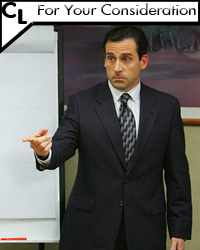 Lead Actor in a Comedy Series
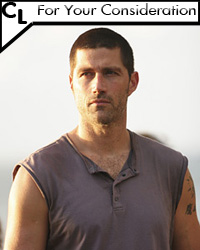 Lead Actor in a Drama Series
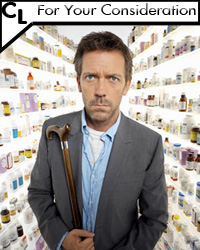 Lead Actor in a Drama
 Lead Actor in a Comedy
 It looks like the trend of heroes finding love with other heroes will be continuing on NBC’s Heroes. Cultural Learnings reported on the casting call for various roles on the drama series some time ago, but now one of those roles has been cast:
  Lead Actor in a Drama
 Lead Actor in a Comedy
 Well, it could have, but instead Sorkin turned it into the only dramatic tension in the entire show. And their “Jesus vs. Not Jesus” arguments were always the same, always not that interesting, and always something we’d heard before. In the pilot, Matt and Harriet working together was something that was to be awkward and difficult; in the rest of the series it just seemed like two people bickering all the time. When the rest of the cast calls Harriet on the bullshit in something like episode 17, it was about 15 episodes too late.
 Except that they completely disappeared after week one, only to reappear at strange times like this week’s episode where he referenced being an alcoholic. A cocaine addiction isn’t something that should go away that easily, and Sorkin is basically admitting that it was only a contrivance to get him away from the movie pictures. Which, really, should have been his desire the entire time while producing the show, but apparently everyone has forgotten about that. And yet it’s MATT who ends up addicted to painkillers late in the season. Go Sorkin.
 Lead Actor in a Drama
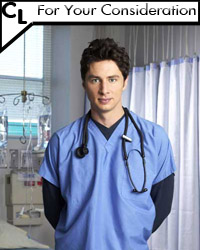 Lead Actor in a Comedy
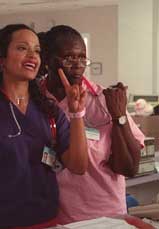 Last season on Scrubs, Laverne (Nurse Roberts, portrayed by Aloma Wright) passed away after a car accident that saw her character, with great faith in God, be cruelly taken from her colleagues at Sacred Heart. The death felt rushed, but it did finally provide the show some real emotional drama that actually resonated, so it was a creatively strong development…however, it appears that Bill Lawrence made a sacrifice in order to make it happen.


 Cultural Learnings