
 Pilots are not made for normal audiences.
When you make a television pilot, your audience is a group of network executives who make final decisions and test audiences who are used as a barometer of how America will respond to said pilots. It’s why pilots tend to be bigger, and broader, and in general more attention-grabbing—for better or for worse—than episodes that come after.
In this way, Amazon’s “democratic” pilot process—in which they make their pilots available online for audience voting before making final pick-up decisions—is not necessarily out of the ordinary. Writers and producers have always known that their work would need to meet dueling expectations of executives and audiences, so we have yet to see a completely new approach to television pilots emerge from the process.
However, the way each of this year’s comedy and drama pilots—I’m excluding the kids’ shows—engages with the specificity of the Amazon experience has been particularly fascinating for me, even in its subtlety. Part of this stems from the overdetermined nature of the audience feedback within rhetoric surrounding the series: in Amazon’s universe, customers are selecting what shows go on the air. Forget for a moment their Golden Globe-winning Transparent drew the least customer votes and scored the lowest customer scores during its pilot process—in Amazon’s mind, this is about the audience, and so it makes sense for producers to angle harder in that direction and play to their assumed test audience.
Yet this is further amplified by the fact that there is even less clarity than usual regarding what precisely Amazon is looking for. Whereas working with a broadcast network or established cable channel gives you a basic sense of brand identity and programming strategy, Amazon has been all over the map, making it up as they go along. While we can start to see trends in their focus on Transparent’s awards success, we still have no clear sense of who their perceived audience is, or what their demographic priorities are. Do they want shows for men or women? Are they privileging comedy or drama? We don’t even know how many shows they’re willing to pick up, given that they have no “schedule” with empty slots, and have theoretically bottomless pockets from which to fund their move into original programming.
It’s plausible that those creating this cycle of Amazon pilots know more than we do about Amazon’s plans, but the fact remains that the audience is the clearer target, and there are a range of strategies that the pilots unfurl to ensure positive responses and high scores in the areas that they believe count most—or at least count a little—with Amazon.

 Bones, meanwhile, is moving to find itself a new timeslot away from a rather tough Wednesday 9pm lineup (Private Practice, Criminal Minds, Bionic Woman). The FOX forensic crime procedural will be moving to New Amsterdam’s timeslot of 8pm on Tuesdays (Starting on September 25th) before itself likely moving to Fridays at 8 in January.
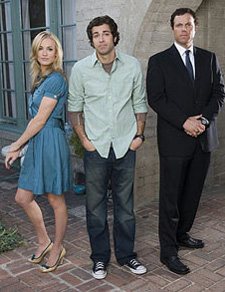 When Josh Schwartz created The O.C., he became a household name due to the show’s success and the pop culture phenomenon that developed. He was the young writer-producer who was setting television on fire, and the world was at his doorstep waiting for him to emerge victorious again. However, The O.C. ran into some trouble, and all of a sudden Josh Schwartz was behind a losing property that limped to its fourth season finale.
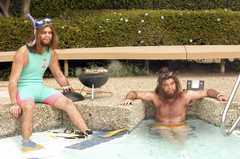 Cavemen (ABC)
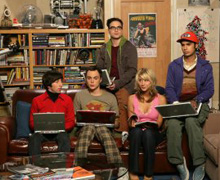 The Big Bang Theory (CBS)
 Over the weekend, online pirates were pleased to see that the flood was beginning: torrent sites across the internet began posting leaked screener copies of the 2007 pilots from FOX’s much-discussed Terminator spinoff Sarah Connor Chronicles (Pictured) to ABC’s buzz-worthy drama Pushing Daisies. I can only speculate, but I imagine that some people at the networks might be upset to see this. However, part of me really hopes that there is a certain number of employees who realize that these pilots leaking onto the internet is not the end of the world. In fact, it might be the best thing that happened to these shows. And the networks should have been putting them online themselves.


 Cultural Learnings