What Genre Is This?: How We Classify Webseries

JulesAndMonty

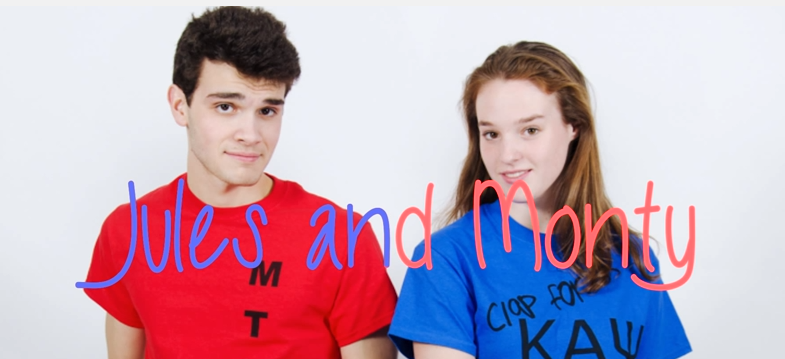
Since I originally wrote a Tumblr post about it, I’ve been following college-set Romeo & Juliet adaptation webseries Jules and Monty, which wraps up its eighteen-episode run on Monday (May 5th). As that Tumblr post suggests, some of this has to do with a general appreciation of what the project represents, and the way the webseries form gives real college students the chance to produce and then distribute something that can reach potential fans in the same places where other big-name projects can be found. However, the show itself has been a compelling take on the material, and has been pushing at a question I’ve been puzzling over regarding webseries—and television more broadly, really—for some time.

It began with two relatively concurrent events. The first was the release of Episode 14 of the series, in which Jules is confronted by her brother, Cliff.

The episode is notable for the presence of a trigger warning, preparing its audience for the violence within. In a Tumblr post, executive producer Imogen Browder explains the logic behind the trigger warning:

“I knew that if that scene had affected me so much in the room, and I knew it was coming, then we would be doing a disservice to our audience to not give at least a simple warning—and based upon the reaction we’ve received, I’m glad it’s there. It was important to our team that we protect our audience, as no one wants to go on to YouTube expecting to see another montage and instead watch something that could potentially have a seriously negative effect upon them.”

In a response to that post, director Evey Reidy notes that the trigger warning conversation is ongoing within the theater community at Tufts (where the webseries and its cast and crew are based), placing this as part of a broader conversation within the world of the cast and crew. In both cases, the creative team reveals their belief protecting their viewers outweighs any sort of narrative purity (which would have, one presumes, maintained the shock of the moment rather than “spoiling” that Cliff would strike Juliet in the midst of their argument, a decision that reflects many adaptations of the source material).

Continue reading

6 Comments

Filed under Web Series

Game of Thrones – “Oathkeeper”

GameOfThronesTitle2

“Oathkeeper”

April 27th, 2014

“You want to fight pretty, or do you want to win?”

Later this evening, a feature will go live at The A.V. Club that focuses on some of the changes between A Song of Ice and Fire and Game of Thrones. [Edit: You can find said piece here.] When completing my own contributions to this feature, my interest was less in discussing whether or not the changes involved were good or bad, but rather to consider how the logistics of making a television series necessitated certain changes that had a clear effect on how this story is being told.

It’s fitting that it’s emerging on a night when there’s plenty more to add to the list. “Oathkeeper” is written by Bryan Cogman, who of the show’s writers had the most to live up to when it comes to the text of the original novels. Now a co-producer on the series, Cogman has been the person in the writers’ room with the closest relationships to the books and their lore, and has been the most active of the show’s writers in engaging with the series’ rabid fanbase. Although he never outright swore an oath to fans of the books regarding keeping their spirit intact, he’s been the most directly tied to fan communities, drawing both praise and anger in equal measure as the two narratives play out.

I say “two narratives” because I think it’s necessary at this stage in the game. Ultimately, I feel safe in saying that A Song of Ice and Fire and Game of Thrones are telling the same story, but they’re following two different narrative paths to get there, as evidenced by an episode that does a lot of labor in the interest of condensing a sprawling narrative into something more manageable for a television series. The result at times feels like pieces on a chessboard being awkwardly pushed together in ways that break the rules, but they’re rules only some of the show’s audience will even know exist, and rules that—unlike oaths—are made to be broken in the interest of a new set of rules that have developed over the course of this new narrative.

Continue reading

11 Comments

Filed under Game of Thrones

2 Channels of Discovery: YouTube, Stardom, and 5 Seconds of Summer

5sos

Around two years ago, America was meeting One Direction.

Pop music moves quickly: since then, One Direction has released three albums and a feature documentary/concert film, and is preparing for a U.S. stadium tour later this year. Building on my initial consideration of the band’s appearance on Saturday Night Live, the band and its fanbase have been a point of interest for me during this period. There was the time their fans threatened The Who on Twitter, the time they fought back against restrictive definitions of fandom reinforced by Ubisoft in a YouTube ad, and the time when Larry Stylinson shippers were shamed by promotions for a documentary airing in the U.K. And that’s only scratching the surface of a band and fanbase that remain at the epicenter of contemporary notions of stardom both on the Internet and within the music industry (where the band continues to function in a marginalized yet lucrative corner different from the “success” of the boy bands of my own youth).

Within this context, my brother Ryan—who, if you’re unaware, writes about music as I write about television—reached out for my thoughts on One Direction’s opener on their upcoming stadium tour, 5 Seconds of Summer, who are currently embarking on a similar American tour. His interest was in thinking about the function of genre, as the Australian foursome functions as what he calls “the next logical evolution of One Direction” through their direct engagement with rock music. Whereas One Direction’s expansion into the rock space was part of a gradual evolution (and a clear claim at legitimation relative to the bubblegum pop of their “youth”), 5 Seconds of Summer is starting from a place of playing their own instruments, writing their own songs, and resisting the label of “boy band” despite being a group of four teenagers with carefully cultivated haircuts.

The band raises many interesting questions, and considering the relationship between the two bands—who are not coincidentally managed by the same company—offers lots of broader considerations of the way we can understand “boy bands” as a construct that can cross generic lines in our contemporary musical moment. Musically, “She Looks So Perfect” looks set to make a run as a potential summer anthem, and the EP of the same name sold 143,000 copies in its debut (which is not far off from the 176,000 copies One Direction sold of their first LP in 2012).

But what I’m interested in exploring is what I discovered when I was prompted to consider the band more carefully. Searching for the band on Spotify turned up She Looks So Perfect and its four carefully curated pop songs, designed to break the band into the American market after previous success in the U.K. and their native Australia. However, what I found on YouTube was something entirely different, an extensive back catalog of original material and video content. The discovery has me thinking about the narrative of “discovery” as a form of branding, and the ways the band’s launch shows an interest in maintaining that narrative as the primary lens through which the band is to be viewed.

Continue reading

Leave a comment

Filed under Music

Discourse of Thrones: Jaime, Cersei, and Confronting Rape

GameOfThronesTitle2

Discourse of Thrones: Jaime, Cersei, and Confronting Rape

April 21st, 2014

When I wrote my review of “Breaker of Chains” on Sunday afternoon, I certainly knew that the scene between Jaime and Cersei at the Sept of Baelor would cause a conversation.

This is both because of the fact that it signals a departure from how the scene plays out in the books and the fact that it features a character that has become a more inherently likeable character in the series committing an absolutely vile, unforgivable act. On the whole, though, I thought the scene played in the same thematic territory as its literary progenitor, such that any conversation would be more about the impact on—rather than destruction of—the characters in question. I did not imagine the scenario we’ve arrived to, in which the scene is causing a considerable and often ugly debate (provided one makes the mistakes of reading the comments, perhaps even on this piece I’m in the process of writing).

Or, rather, it’s causing two debates.

Continue reading

77 Comments

Filed under Game of Thrones

Game of Thrones – “Breaker of Chains”

GameOfThronesTitle2

“Breaker of Chains”

April 20th, 2014

“I will not become a page in someone else’s history book.”

As is often the case with watching Game of Thrones as a book reader, I left “Breaker of Chains” with questions about how non-readers would receive the episode.

These are not simple evaluative questions like whether readers would enjoy this scene or that scene in the episode. Like most, it’s a compelling episode, with some fantastic scenes in the fallout of last week’s major events. Rather, they are questions of whether or not reveals that are obvious to readers—we know what’s about to happen—are anticipated by non-readers in the way the series would seem to be hoping for.

Continue reading

4 Comments

Filed under Game of Thrones

Game of Thrones – “The Lion and the Rose”

GameOfThronesTitle2

“The Lion and the Rose”

April 13th, 2014

“Blackwater” has often been cited as the definitive Game of Thrones episode, capturing the scale and sheer expense that have come to define the series within television culture. It was also an episode that George R.R. Martin scripted himself, finally seeing the scale he had taken to literature to obtain come to life onscreen (albeit still with a degree of sacrifice to his most ambitious visions for the episode).

At the same time, though, Martin’s scale only rarely manifests as the episode’s bombast. It tends to manifest in minutia, in the sheer detail of individual scenes. This has primarily come in the form of feasts, gallant affairs where Martin revels as much in the food on the table as the people sitting at it. It’s an effort to provide scale not in the form of giant explosions, but in the form of atmosphere—he wants you to feel like you’re there, which is often more about tone than anything else.

It’s something the show has rarely been able to communicate the same way: few scenes have lasted long enough to luxuriate in the environment, and to create that sense of becoming lost in the splendor. The closing sequence of “The Lion and the Rose”—detailing Joffrey and Margaery’s wedding and reception—is one of the first, a carefully designed piece of theater that is all about moving pieces, each more detailed than the next. It’s also a scene that deploys that detail for a specific purpose, crafting a sequence that builds to its conclusion at such a rate that even those who don’t know what’s about to happen know that something is about to happen.

That it’s something both readers and non-readers alike have been waiting for is just the icing on the cake.

Continue reading

9 Comments

Filed under Game of Thrones

Season Premiere: Game of Thrones – “Two Swords”

GameOfThronesTitle2

“Two Swords”

April 6th, 2014

“Killed the right people, I suppose.”

The beginning of Game of Thrones’ fourth season is caught in evaluative limbo.

We are past the point where it is a critic’s job to tell you what Game of Thrones is. At this stage, the show is the show, and nothing in the first three episodes of the season—which were sent to critics—changes that. To write an advance review of a season of Game of Thrones is less about evaluating its quality and more about offering vague previews of what’s to come for those who haven’t read the books but nonetheless want some sense of where their favorite characters are headed in the early-going, or for those who’ve read the books and want a basic gutcheck on how certain details were translated. If something in these first three episodes actually changes someone’s mind regarding the series, it would shock me not unlike the Red Wedding shocked non-readers.

This might be the last time I say this. The fourth season marks the first that will begin to actively and aggressively merge material from multiple books, likely resulting in some of the most substantial deviations from the source material to date. As someone whose interest in writing about the show comes in large part based on how the series approaches narratives, characters, and themes from the book in a different medium, we are on the verge of one of the most exciting periods for the series, one where the discourse will take on considerably higher stakes. Will readers embrace the changes? Will non-readers even notice that something is amiss?

“Two Swords” marks the calm before the storm, hence the evaluative limbo—although we are approaching the moment when I expect we’ll see far more interesting ranges of critical response to the series, the season premiere has the series firmly in transition, still holding onto the familiar instability we’ve come to understand. It’s a delicate transition, mind you, and one that David Benioff and D.B. Weiss—who doubles as director—handle extremely well, but it’s ultimately a familiar feeling returning to Westeros in season four.

Continue reading

10 Comments

Filed under Game of Thrones

Series Finale: How I Met Your Mother – “Last Forever”

himymtitle

“Last Forever”

March 31st, 2014

I want to say upfront that I think the How I Met Your Mother finale was not an abomination. It featured a number of resonant moments, images, and character beats that tapped into what made the series resonate early in its run. When it finally reached the moment the series had been building up to, the chemistry between Josh Radnor and Cristin Miloti was quiet and sweet, and it stands as one of the series’ finer moments. This was a series that set out to tell a non-linear story about love, and delivered a—somewhat—non-linear finale about love, such that no one can claim How I Met Your Mother was a dramatically different show at the end than it was in the beginning.

However, I also want to say that I hated the How I Met Your Mother finale. A lot.

Continue reading

7 Comments

Filed under How I Met Your Mother

“Just Remember Me When…” – The Uncertain Legacies of the Veronica Mars Kickstarter

Screen Shot 2014-03-15 at 10.04.31 AM

Exactly a year ago today, I wrote a piece about the experience of the Veronica Mars Kickstarter where I explored the meanings of “following” a Kickstarter campaign as it reaches its goal, arguing for that twelve-hour period as a key space of meaning for fans of the franchise. I framed that experience as the queue for an amusement park ride, but the metaphor had one problem: in this context, what constitutes the ride?

Kickstarting Veronica Mars: A Moment in a Movement – Antenna: Responses to Media and Culture

“As with some theme park rides, the line between the queue and the ride will be blurry in this case: does the ride begin when the Kickstarter reaches its goal? Or when the film is released next year? Or when the film goes into production this summer (since viewers were supporting not the project being released but rather the project existing at all)?”

Around the same time, I was invited by Bertha Chin and Bethan Jones to participate in a dialogue regarding the Veronica Mars Kickstarter, crowdfunding, and fan labor for Transformative Works and Cultures. Within that conversation, which took place in the weeks following the campaign’s success, fellow panelist Luke Pebler rightfully highlights the way uncertainty framed any and all conversation surrounding the Kickstarter around that time.

Veronica Mars Kickstarter and crowd funding – Transformative Works and Cultures

“A recurrent theme in these discussions seems to be, how will it all look once it’s over and the thing kickstarted is complete and released? Will backers ultimately be happy? Will producers be happy? Will it all have been worth it? It’s going to be an excruciatingly long wait to find out, in many cases.”

Ignoring for a moment the subtle irony that we had to wait almost as long for our conversation to be published as Veronica Mars fans had to wait for an entire movie to be funded, produced, and distributed (and Transformative Works and Cultures is fast by academic standards, and should be lauded for its belief in open access publication so I can link non-scholars reading this post to the conversation in question), the uncertainty evident in both my and Luke’s commentary has been the greatest takeaway from the Veronica Mars Kickstarter experience. Until the film was released yesterday, the Kickstarter existed in this state of receptive limbo, and even after the film’s release the questions of value and fan agency discussed in our conversation remain fluid as Warner Bros. struggles to manage digital distribution controversy.

Continue reading

Leave a comment

Filed under Veronica Mars

Risk/Reward: The Crude Experimentation of ABC’s Mixology

MixologyImage

Mixology doesn’t make sense, at first.

During the panel at the Television Critics Association press tour for the series in January, the producers were asked a range of questions about the viability of the show’s premise—documenting ten singles in one night in one bar—before I got a chance to ask my question, which was basically a good-natured way of asking “Did anyone try to convince you not to do such a thing?”

Television development is a game of risk/reward. Mixology represents a substantial risk for creators Jon Lucas and Scott Moore, as it’s their first television show and they’re playing with narrative in ways that most would advise against. As I noted in asking my question, there is no escaping this premise—whereas other shows can throw out their premises (see: Cougar Town) or make significant adjustments to characters as they evolve over time (see: Parks and Recreation, The Office), Mixology is tied to telling one story about ten characters in one night in its first season (which debuts tonight at 9:30/8:30c on ABC).

To their credit, Lucas and Moore were fairly open about the fact that this was a swing. Speaking to reporters, Moore described the process of the show’s creation:

“We just kind of sat down and thought what would be the best show, most interesting show to us, how to do it differently, how to show people, like, meeting and falling in love and that comedy in a different way.  And we didn’t really think about, sort of, the structure of TV and how it works and all of the rules.”

It’s easy to scoff at this—I do it often when film writers move into television, seemingly with no attention to the medium’s specificity—but in talking with Lucas and Moore after the panel it became clear they understand television enough to know they’re breaking some rules. Although the room didn’t exactly buy Moore’s attempt to sell the show as “Lost in a bar,” it was at least a gesture toward the televisual tradition the show leans on, and on principles of episodic and seasonal storytelling the show needs to address to succeed. Mixology has aspirations, ones that make it an interesting experiment in how we connect with characters, and how stakes function in television comedy.

It’s also a show that, six episodes in, makes more sense than it did at first, if not enough to make it a fully successful experiment.

Continue reading

Leave a comment

Filed under Mixology
