Tag Archives: Analysis

Why The Homeland Twist Works [For Me] [Mostly] [Okay, Barely]

HomelandTitle

“Game On”

October 20th, 2013

Last year, The New Yorker’s Emily Nussbaum had a theory about Homeland. She argued that Sgt. Nicholas Brody’s panicked communications with Abu Nazir as Carrie Mathison was held hostage were all an act, and that he was in on the plan from the beginning.

It was an interesting theory, one she gave me credit for partially debunking by noting that Abu Nazir and Brody continue speaking in the same manner once Carrie is no longer listening to their conversation. For me, that was the sign that the theory couldn’t work: while an interesting idea, I did not believe Homeland was a series that would so actively mislead the viewer with information that—in hindsight—would contradict the intended truth of the situation.

If you saw last night’s episode of Homeland, and have been following some of the subsequent conversation, the above may sound familiar. Indeed, this season’s central storyline almost feels inspired by Nussbaum’s theory, as though the writers took it as a challenge as to whether the series could sustain a twist that in retrospect contradicts many of the storylines and character actions displayed in earlier episodes and maintain its reputation.

The response to “Game On” suggests that they can’t, but that doesn’t necessarily mean I’m no longer on board.

Continue reading

2 Comments

Filed under Homeland

Homeland – “Tower of David”

HomelandTitle

“Tower of David”

October 13th, 2013

It’s been a few months since I watched the first two episodes of Homeland‘s third season. They were made available to press ahead of the show’s panel at the Television Critics Association press tour, which was logical—in that it allowed those in attendance to ask informed questions rather than random guesswork—but also daring. It was daring because in the two episodes screened for critics, Nicholas Brody did not appear for even a brief sequence, and yet Damian Lewis was seated on the panel at the Beverly Hilton.

I tweeted in advance of that panel that I was interested to see how the room responded to this (among other facts about Homeland‘s third season, specifically the increased focus on Morgan Saylor’s Dana), but Showtime was quick to offer clarification: a trailer revealed early footage of Brody’s first appearance in “Tower of David,” and the panel confirmed he would return in the very next episode beyond the ones we had seen. Part of me had expected them to treat Brody’s return as a surprise, leaving his fate open-ended, but from the beginning Brody was something the series was very open about, creating a certain suspense to see how the show planned on reintegrating the character into the narrative.

“Tower of David” works as a structural exercise in character development, drawing a parallel between Brody and Carrie’s respective prisons. However, it fails to acknowledge and mitigate the issues that plagued the two characters’ development last season, leaving an episode that works up until the point you look into the past rather than the present/future.

Continue reading

1 Comment

Filed under Homeland

Series Finale: Breaking Bad – “Felina”

BreakingBadTitle“Felina”

September 29th, 2013

A series finale is different from any other episode of a television show; the biggest test for a series finale is whether or not it feels different from any other episode of that television show.

Breaking Bad has been an often messy show, driven by complex moral agency and characters who seem simultaneously the architect and the victim of chaos. It was a series that continued to grow in scale but largely followed the same principles of tight characterization and almost claustrophobic connections with those characters. In the show’s third season, it delineated between “half measures” and “full measures,” and the series was ultimately a narrative driven by the former: while some were explosive and others were tragic, there was never a moment when one could say that Breaking Bad had solved or even dramatically mitigated its central conflict.

It was this quality that gave the series its momentum, and enabled it to grow an audience of devotees from a series that many people—myself included—had not given much of a chance in its early seasons. It was also this quality that by the very nature of a series finale was forced to change in “Felina,” a clean end to a messy show that very purposefully limits its capacity to embody the series it brings to a conclusion.

Continue reading

27 Comments

Filed under Breaking Bad

Mad Men – “In Care Of” and the Narrative Engine of Place in Season 6

madmen2

“In Care Of” and the Narrative Engine of Place in Season 6

June 24th, 2013

“This is where everything is.”

Mad Men began with a spatial divide. In the series’ pilot, we are introduced to Don Draper in Manhattan but only get the full picture when we follow him onto the train to the suburbs, and to the family life he leaves behind every day he travels into the city. The show was invested in exploring the distinct ebbs and flows of those two spaces, and on Don’s ability to travel between them. While we would come to learn that Don had been living a double life for most of adulthood, initially we watched a man live two lives separated by the train ride between them.

The show evolved beyond its urban/suburban divide, adding enough complexity to both Don’s family life and Sterling Cooper as a setting that it would seem reductive to boil the show down to this dichotomy. And yet although Don was no longer traveling to the suburbs since separating from Betty, the spatial divide stuck around thanks to characters like Pete, who began the season in his city apartment that would become his primary residence after he proved less agile in his duplicity than Don was. And as Betty explored the life of young runaways or as Peggy let Abe talk her into living in a nascent neighborhood, New York City was no longer confined to the offices of Sterling Cooper, gaining diversity and perspective as the turmoil of 1968 played out over the course of the season.

Mad Men’s sixth season was far from the first time the show has become invested in the meaning of space and place, but “In Care Of” highlights how central the idea of “going somewhere else” has been to this season in particular. For a season that began in the escape of Hawaii, and jetted to Los Angeles and Detroit and to upstate New York in a very tiny plane, it ends with multiple characters imagining what life would be like away from New York. In the process, we can imagine a final season spread across the country, even if we can also picture a season that remains tethered to the Manhattan Mad Men has over time embedded into the fabric of its storytelling.

Continue reading

5 Comments

Filed under Mad Men

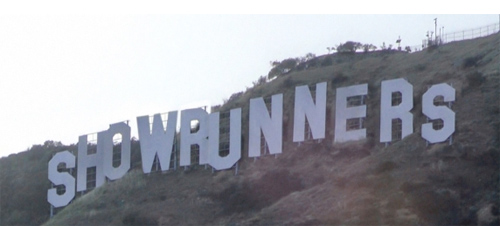
The Fallacy of the Showrunner Fallacy (And Why It’s Still Productive)

ShowrunnersLetters

In The New Republic’s “The Showrunner Fallacy,” Craig Fehrman responds to what he considers a troubling development within television criticism. Citing Alan Sepinwall’s The Revolution Was Televised and Brett Martin’s forthcoming Difficult Men: Behind the Scenes of a Creative Revolution, Fehrman focuses on what he terms the “veneration” of the television showrunner, which he argues “does not explain TV’s greatness.”

“But this obsession with showrunners—what we might call the showrunner fallacy—has obscured what makes television so great[,] … prevent[ing] [critics] from exploring the people and pressures that are unique to television—exactly what the medium’s reporters and critics should be working to understand. Instead, they praise or blame the showrunner, succumbing to a kind of narrative simplicity that we would never accept in an Emmy-winning drama.”

It’s an article that touches on two of my interests: the evolution and function of television criticism, and the rise of the showrunner as a primary figure in television production culture. It’s also an article where I sympathize with Fehrman’s argument while ultimately disagreeing with his conclusions: without adding some key qualifiers, the suggestion critics’ focus on showrunners is a fallacy pushes too far to devalue—rather than simply reevaluate—a mode of analysis that holds incredible value within broader conversations of television culture.

The—I presume editorial—“dek” attached to Fehrman’s article online reads “Veneration of TV Auteurs does not explain TV’s greatness.” When I went to post about the article on Tumblr (before realizing I had more to say than would fit in a Tumblr post), this sentence came up to represent Fehrman’s argument, and it helped me work through my primary issue with the piece: in an effort to push us past the importance of the showrunner, Fehrman develops his own logical fallacy where he elides the centrality of showrunners within his view of television production culture to make a point.

Continue reading

3 Comments

Filed under Television Criticism

Season Finale: Game of Thrones – “Mhysa”

GameOfThronesTitle2

“Mhysa”

June 9th, 2013

“Here only the family name matters.”

As Varys explains this fact to Shae, he’s being pragmatic: he’s trying to help someone whose very existence at King’s Landing threatens her own life and the life of the man she loves. Varys acknowledges that she has made Tyrion better. Varys acknowledges that hers is a true love. And yet Varys also gives her a collection of diamonds, telling her to sail to Pentos and start a new life for herself so that her love can do something good for Westeros without the threat of a single-named woman hanging over him.

It’s dark advice, advice that Shae refuses to take. Despite the fact that we just saw both Robb Stark and Talisa die for following true love over pragmatism, and despite the fact that Jon Snow just took three arrows from the woman he loves, Shae proves what many other characters have learned as well: there is still power in love even when all signs would suggest that trusting in such power will be your undoing.

“Mhysa” is about this love, which may seem strange in light of the fact that last week ended on such a foreboding sendoff for Robb and Catelyn Stark. And yet Game of Thrones needed a new motivation beyond ascending to the throne, a sense of purpose that could evolve beyond the War of the Five Kings and the deaths of Robert Baratheon and Ned Stark which set it off. What “Mhysa” seeks to accomplish is reframe the actions of its characters not as part of a larger power struggle, but rather as actions designed to protect their families or to protect the realm. This is not to say that we are to support the Lannisters’ cruelty or to endorse Melisandre’s sorcery, but rather that we can shift our understanding of their actions away from a part in a larger plot and instead toward what motivated them to take those steps in the first place.

It’s an enriching move that works to build a strong foundation for future seasons, although one that has some issues retroactively making some of the season’s storylines resonate in the way intended. “Mhysa” concludes a third season that was only retroactively revealed—for non-readers, at least—to be the season where Game of Thrones could no longer be simplified to a battle between the Starks of Winterfell and the Lannisters of Casterly Rock, one that did its job without necessarily connecting in the process.

Continue reading

27 Comments

Filed under Game of Thrones

Game of Thrones – “The Rains of Castamere”

GameOfThronesTitle2

“The Rains of Castamere”

June 2nd, 2013

“The closer you get, the worse the fear gets.”

Every season of Game of Thrones has built to a big event in the season’s ninth episode. As a result, the end of each season has continually created a conflict between those who have read the books and those who haven’t: the pattern means that both parties know the season is building to something major, but only those who have read the books know what that is. This wouldn’t be as much of a problem if those people didn’t really, really want to talk about it.

In the first season, I would say fans mostly tried to keep quiet about Ned Stark’s death. The first season hinged on Ned’s story, and the initial shock of his beheading gave the show its big hook that could make casual viewers into fans and help sustain the show moving forward. In the second season, the Battle of Blackwater Bay was a fairly spoiler-free form of anticipation, as there’s nothing to really spoil: no one major dies, Stannis’ attack on King’s Landing is never kept a secret, and the episode was more about execution than surprise (and well-executed it was).

The third season was always going to be the problem. The “Red Wedding” has been on the tips of readers’ tongues since they read the books, considered by most to be the definitive moment in the series. It’s the moment that makes Ned’s death look like just a drop in the bucket, and the clearest evidence of George R.R. Martin’s wanton disregard for his own characters and their happiness. From the time the show first sprung into existence, this has been the moment that book readers were waiting for, and by the time it arrived in the third season there was no longer any concern about letting viewers engage with the series on their own terms out of fear for its future. This season has all been a buildup to this moment, to the point where the phrase “Red Wedding” was something that even those who tried to avoid spoilers were probably familiar with because readers could not contain themselves.

“The Rains of Castamere” arrives with intense expectation, and like many other book readers I sat through the episode with a slightly higher heart rate. As much as I think the fans went too far in proliferating the use of “Red Wedding” and hyping this particular episode as noteworthy, thus providing non-readers enough information to potentially spoil the episode’s conclusion, I can understand why they were excited, and felt that excitement in the moments leading up to the episode and throughout. This is as intense an hour of television that Game of Thrones will produce over the course of its run, and I’d argue it’s a particularly well-executed adaptation that makes some smart choices to salt the wounds left behind by this most storied of literary–and now televisual—weddings.

Continue reading

24 Comments

Filed under Game of Thrones

Season Finale: Orphan Black – “Endless Forms Most Beautiful”

OrphanBlackTitle

“Endless Forms Most Beautiful”

June 1st, 2013

When I attended the Television Critics’ Association Winter Press Tour in January, BBC America presented a panel for Orphan Black, a new drama series originating from Canada (where it airs on Space). It was an interesting panel to attend, because none of the critics in the room had no opportunity to watch it: while we were shown a quick trailer to help give us context, most of the questions were actually asking for more information as opposed to specific responses to the series. What we saw looked interesting, and the panel was enjoyable, but it was an exploratory exercise in a space where greater context is necessary to achieve any real insight.

Reading back over the transcript of that panel, and revisiting this fun interview Will Harris did with the three stars in attendance, I couldn’t help but smile. In retrospect, there are plenty of hints there about the show Orphan Black would become: a fearless, balls to the wall science fiction pleasure that’s smart as hell. Co-creator Graeme Manson was asked about the possibility of flashbacks, to which he responded “Yeah, actually, none at all. We really, really like a story that’s like a runaway train that keeps you on the edge of your seat and has you not sure whether the story is going to take a hard left or a hard right.” Tatiana Maslany was asked about the challenge of playing multiple roles, and explained “Yeah, it’s a challenge, the different arcs. You know, there’s so many arcs to it. So it’s a bit of a mind — I keep wanting to say the wrong word.”

The wrong word is the right word in this case: Orphan Black is a mindfuck, and ends its first season with another segment in the runaway train first season, one that becomes four climaxes in one by the time it reaches its conclusion.

Continue reading

7 Comments

Filed under Orphan Black

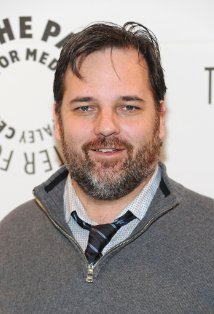
Why would Dan Harmon return to Community?

HarmonImageAs news broke of Dan Harmon’s potential return to Community, it felt like an Internet rumor that Deadline would start in order to drum up potential hits. That’s because that’s what it was, of course, another one of the myriad of “scoops” that Nellie Andreeva gets from her sources at Sony TV who use her as a pipeline to the Internet rumor mill. This doesn’t mean the story is untrue, of course, but rather that there’s a good chance it’s an idea being floated as opposed to an actual, factual thing that’s happening. And so I admittedly didn’t give it a second thought, at least until it became clear that it was—at the very least—something that Sony and Harmon were negotiating about following the confirmed departure of season four showrunners David Guarascio and Moses Port.

My immediate reaction to this was confusion. Why would Sony want Harmon to return to a show that he publicly admitted to mismanaging? And why would Harmon want to return to the show after making a show of moving on with his career? After asking variations on these questions on Twitter, I got some interesting responses, and I think I’ve got a clearer sense on the circumstances that would lead to both parties reconciling their differences to work together again on a fifth season; I also think we need to disassociate this development from any sort of idealistic notion that either party is in this for the fans’ best interest.

Continue reading

12 Comments

Filed under Community

That was (writing about) Arrested Development: TV Criticism in a Binge-Viewing Era

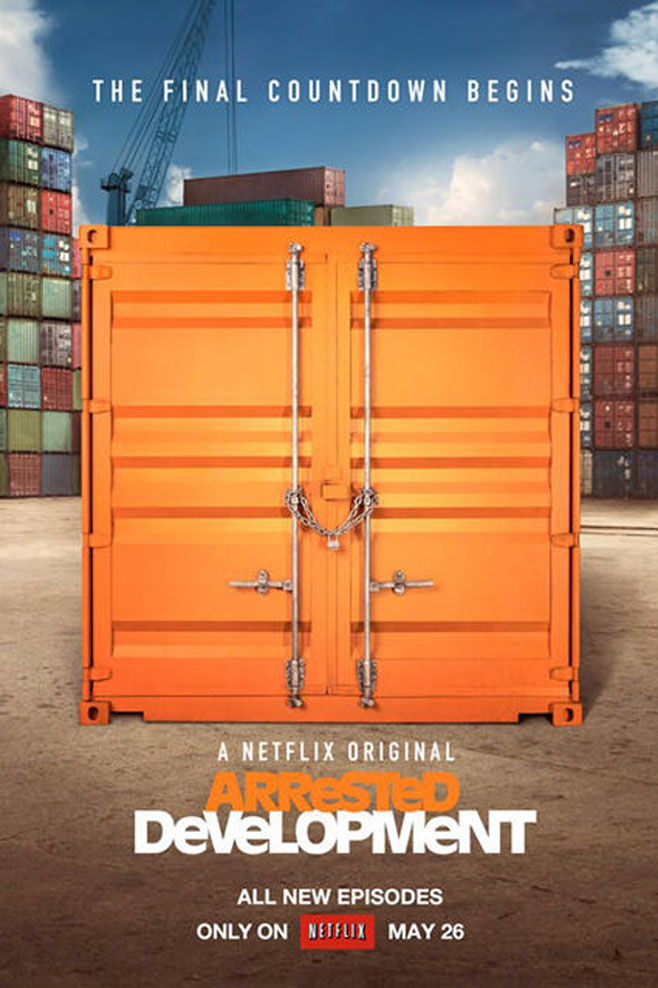
Arrested-Development-Season-4-PosterThere have been suggestions floating around in comment sections that the Netflix model—the decision to release every episode all at once—eliminates the function of traditional episodic television criticism. With viewers now able to choose the pace at which they watch episodes, potentially watching an entire season of Arrested Development in one session if they’re so inclined, the need for critics to evaluate individual episodes is no longer present. This is doubly the case, some would argue, with the puzzle-like structure of Arrested Development’s fourth season, which further confounds episodic analysis through its choice to emphasize each episode’s connection to a larger story arc one can’t truly appreciate until you’ve seen all fifteen episodes.

We’ve been talking about the former ever since Netflix released all of House of Cards at once in February, and there has been further conversation in the buildup to Arrested Development’s this weekend (including the ridiculous theory that critics are biased against Netflix for destroying their cultural purpose, a claim I responded to here). However, I have to admit that I’m not sure Netflix’s paradigm shift is actually anything close to a paradigm shift. Putting aside the fact that Netflix’s claim we will in the future move to a completely mass-release system of television distribution—which I talked about in a CBC Web Chat last week—ignores a lot of functional realities of the television industry which have permeated even webseries distribution patterns, I still feel like episodic and other forms of television criticism are useful and productive within the space of binge viewing habits.

Any suggestion to the contrary seems to be operating with a very limited conception of how and why episodic criticism is written, which functions in opposition to the ways in which binge viewing can allow us to expand—rather than contract—forms of television criticism in the wake of the binge viewing moment.

Continue reading

2 Comments

Filed under Television