Tag Archives: Television

Game of Thrones – “Dark Wings, Dark Words”

GameOfThronesTitle2

“Dark Wings, Dark Words”

April 6th, 2013

“I try to know as many people as I can. You never know which one you’ll need.”

When HBO’s decision to order Game of Thrones to pilot was first announced, I went back and began rereading the books in preparation. At the time, I wrote a piece thinking about how the structure of the books—specifically the chapters told from specific characters’ points-of-view—would prove a challenge, but how there remained thematic through-lines that could be capitalized upon.

More recently, Benioff and Weiss have said that they aren’t structuring the show around themes, suggesting they’re for grade school book reports. It’s a silly comment, and I will continue to remark upon clear themes that run through both the series and the novels on which that series is based, but I do think that they’re right on one point: this is not, primarily, structured as a thematic story. And yet, given the fact that the narrative has become dispersed from a clearly outlined conflict—the War of the Five Kings—into a scattered collection of individual narratives, a question is raised: how exactly is the show being structured?

To suggest that Game of Thrones is a character-driven show is not exactly groundbreaking, but I was struck during “Dark Wings, Dark Words” how the show is actually organized by character. In thinking about some of my pre-air thoughts regarding how audiences might respond to some characters better than others, I watched the episode thinking through one primary question: who is this scene about? While the fragmentation of the narrative means that no single episode will be about one single person, the focus of a given scene nonetheless often falls to a single character, and not always the character we might presume it to be. And while there is a collection of new characters introduced in this week’s episode, none of them feel like their scenes were about them so much as the existing characters they were meeting. At the same time, meanwhile, some characters whose existence was once defined by their support of other characters have become subjects of their own storylines, even if their role within the larger narrative hasn’t necessarily changed.


Continue reading

15 Comments

Filed under Game of Thrones

Season Premiere: Game of Thrones – “Valar Dohaeris”

GameOfThronesTitle2

“Valar Dohaeris”

March 31st, 2013

“You’ve got to invent a story about where the ship is going and why.”

As Sansa and Shae look out on Blackwater Bay imagining where the ships are going, it’s hard not to think about the last time we as an audience watched the ships on Blackwater Bay. “Blackwater” brought a striking amount of clarity to the show, its tight focus clearly defining where the ships were going: Stannis Baratheon intended to take King’s Landing, because he believes himself to be the one true king of Westeros.

As Game of Thrones returns for its third season, such clarity seems long gone. As Robb notes, his men haven’t had a real battle in weeks, their “war” more of a glacial march in search of Lannister men more likely to “raze and run” than fight in the open battlefield. Stannis has retreated to Dragonstone to burn men alive in sacrifice to Melisandre’s lord of light, in hopes they will provide a path forward. Westeros is still at war, that much is certain, but the terms of that warfare are as muddled as they’ve ever been: much as the Narrow Sea separates Daenerys from her place on the Iron Throne, the other would-be Kings are equally unable to directly and openly lay claim to the title.

And yet they keep moving. Indeed, outside of those who remain at King’s Landing, nearly every character or group of characters are on the move, although it’s not always clear where they’re moving to precisely. “Valar Dohaeris” might reintroduce us to a collection of the show’s characters, but it’s an introduction that mostly finds characters exactly where they were before. The result is a premiere that lacks excitement not because things don’t happen, but rather because there’s little new information to hint toward what will happen next, relying on more general anticipation—often, to Sansa’s game above, of the viewer’s invention—as the narrative moves at its own pace.

Continue reading

10 Comments

Filed under Game of Thrones

Review: Slivers of Satisfaction – Game of Thrones Season Three

GameOfThronesTitle2

Review: Game of Thrones Season Three

March 25th, 2013

At the conclusion of watching the third season premiere of HBO’s Game of Thrones, I realized something: despite the fact that I had enjoyed the premiere a great deal, it hadn’t featured a single scene with one of my favorite characters.

Of course, this is not a new problem for the series, what with its intense narrative fragmentation: Jason Mittell’s analysis of the series’ “scenic rhythms” spoke to this at the end of last season, wondering whether this helped explain his different responses to the first season (which he binged on) and the second season (which he watched weekly).

I’ll leave it to Jason to actually break down the number of scenes/foci in the second season premiere, but it’s safe to say the show remains committed to telling a sprawling collection of stories in season three. What’s different, though, is that there is no longer—or rather not yet—a central conflict that anchors the narrative in the way that Ned Stark’s plight in King’s Landing or the War of the Five Kings offered in previous seasons (even though the latter is still ongoing, albeit with fewer kings). While the kingdom ostensibly remains at war, the events that open the season place everyone in a sort of holding pattern, leaving each story to create its own purpose and momentum.

These two challenges—an increasingly fragmented narrative and a lack of a clear overarching story arc—are not insurmountable; in fact, I found neither to be particularly concerning, and found the first four episodes of the season to be a most welcome return to Westeros. However, the circumstances under which I viewed these episodes mitigated these factors in ways that not all viewers will have access to. As someone who has read the books, I know where these narratives are heading, and can therefore read purpose and momentum in ways that those ignorant to those futures may not. And as someone who is lucky enough to receive advance screeners for the series, I had the luxury of popping in the second episode when I discovered one of my favorite characters doesn’t appear in the first one, something that those watching weekly won’t have.

What I’m suggesting, I suppose, is that Game of Thrones has evolved in such a way that I’m unsure if my experience with the show’s third season can be successfully mapped into a more generalized “review.” I thought every storyline was well executed, I enjoyed every episode, and I was left wanting more, but I also left wondering how much those responses were shaped by the context in which the episodes were viewed, and if we’re reaching the point where reaction to the series will be divided more starkly among devoted viewers and more casual audiences.

Continue reading

14 Comments

Filed under Game of Thrones

Returning to Glee: “Dynamic Duets” and the Improvements of S4

“Dynamic Duets” and Season Four So Far

November 22nd, 2012

I was at a Thanksgiving gathering today, and an open question was asked regarding the quality of Glee this season. An initial opinion suggested the show was terrible this year, and without any hesitation I disagreed: Glee, to my mind, has been measurably better than last season, and probably the season before.

I don’t know if this is a controversial opinion, but it was met with skepticism by the room, and perhaps rightfully so. Given the sheer number of words I spent laying out my frustrations with the show before quitting weekly reviews, I am all too familiar with Glee’s flaws. And to be clear, the show has continued to have these problems, and I’ve continued to sit on my couch and complain to Twitter about them like a crazy person. But around those problems has grown a season moving with purpose the vague “graduation” theme never offered, pulling fewer punches and forcing its characters to ask questions that occasionally threaten to mean something.

Put more simply, Glee is a better television show this season. Its flaws, while still numerous, feel like the byproduct of trying to do something instead of the byproduct of doing nothing, a constructive shift that helps the show overcome its occasional missteps to reach musical resolutions that feel earned.

Continue reading

3 Comments

Filed under Glee

Alone in a Dark Place: Building Byzantium for Cinemax’s Hunted

When you complete each stage of the process involved in ByzantiumTests.com, an immersive website experience for Cinemax’s new series Hunted (which debuts tomorrow night at 10/9c) that positions the user as a test subject for diegetic organization Byzantium Security International, it asks you whether you want to share your process with any number of social networks.

When I was completing the tests, however, they struck me as intensely personal. Even though the data being collected is far from the precise scientific personality test that Melissa George suggests in the video material accompanying the site, it nonetheless asks us to reflect on ourselves more than anything else, and I’m not sure that’s something I’d want to share with the world at large. One portion of the site asks you to connect the site to your Facebook account, drawing images from profiles—including your own—to probe further into your thought process. The results of the test are rigged in the sense that everyone can make it to the end, but the personalized nature of the test ensures that it’s evocation of the exclusive “1% that matters” highlights the individual nature of the accomplishment (which is part of why I wasn’t interested in sharing my results).

In the previous two campaigns—for Game of Thrones and Bag of Bones—that I’ve discussed from Campfire, who also developed the Byzantium campaign, the goal has been to engage fans and potential viewers in a shared experience of interpreting and participating in a broader activity. We can see a similar strategy in their campaign for USA’s Political Animals this summer—which I didn’t write about given my busy schedule at the time—wherein the community-forming potential for a newspaper’s audience is used to create immersive weekly experiences that nonetheless allow for different people to experience the same basic content. Whether it’s gathering Maester’s for the cause, or working with others to spot the various secrets in the dark stories being told, or sharing fictional political editorials the same way you’d share real ones, the notion of “shareable” speaks not only to the capacity for the pages to be posted to social media, but also the ability for the “experience” to be shared with others like you.

While the Byzantium campaign relies on word of mouth, which is why a wooden puzzle with a flash drive hidden inside arrived at my doorstep late last month, it also relies on potential viewers finding the time to visit the site, take part in the test, and engage with the world-building on display.

Which describes the experience of watching television, in a way. Continue reading

1 Comment

Filed under Hunted

Dexter – “Buck the System” (And Season 7 So Far)

“Buck the System”

October 14th, 2012

*Blows the Dust Off the Dexter Header Image* Well, it’s been a while.

I watched the fifth season premiere of Dexter waiting for a plane, and found it to be your typical episode of Dexter. But as the time crunch of the semester took over, the idea of watching any more floated away, and I hadn’t seen even a few minutes of the show since that point. The show remained “on the radar” as any show does, and certainly the events from the end of the sixth season were more visible than others, but the fact remained that I was content with Dexter being out of sight, out of mind.

This changed when that no longer became possible. During the past two seasons, people weren’t talking about Dexter: sure, there were still record numbers of viewers, but the people on my Twitter feed—people who used to talk about the show—seemed quiet. And then suddenly, there was Alan Sepinwall and Mo Ryan writing about the show again after watching their screeners for the first three episodes of the season. Tonight’s episode, “Buck the System,” was the last episode they saw before writing those pieces, and their support—and the similar mentions of improvement from the rest of my Twitter feed and my students—led me to take a look at the preview disc Showtime had been kind enough to send along.

I discovered a much better show than the one I left, mostly because we’ve reached the point where Dexter is the season’s star. Moving away from the seasonal serial killers of seasons past, the seventh season is invested in exploring Dexter and his impact on those around him, excising entirely unrelated subplots in favor of a web of character beats all focused on the ramifications of his actions. “Buck the System,” on the surface, is the episode where Dexter successfully begins to show Deb the positive benefits of his actions, and the episode where Yvonne Strahovski is introduced as a woman who, as a girl, once fell in with someone like Dexter. However, it’s also the episode where the unintended consequences of Dexter’s actions are equally as clear, at least to someone who is willing or able to think about them (which Dexter, very clearly, is not).

It’s a subtle distinction, but one that won me over, and has me committed to seeing the season out.

Continue reading

Leave a comment

Filed under Dexter

From Backlash to Beirut: Homeland Season Two [Review]

Review: Homeland Season Two

September 30th, 2012

When I saw the finale of Homeland’s first season, a season I oddly never wrote about it any capacity, I was quite impressed. As far as I was concerned, the finale was stuck in a situation where an anti-climax was inevitable: I did not believe they would ever actually kill Brody, and therefore I did not imagine a scenario wherein he would go through with his attack. That belief was something I carried into the episode, and so the fact that they still created a stellar finale with this fact hanging over their heads was quite an achievement.

It worked because it forced both Carrie and Brody to go through the emotional climaxes of their respective arcs without giving them the expected result. Brody presses the button but it doesn’t go off, while Carrie pieces together the plan only to have Brody’s malfunction and change of heart turn her into a liar. Both of them were so sure that they were doing the right thing, that they were doing what was in the best interest of their country, and yet in the end both were forced to move on with their lives wondering if they had just dodged a bullet or made a mistake that will change their lives forever.

I was fascinated, however, to see some substantial backlash toward this conclusion, although this backlash took two different forms. For one group of people, the very idea of Brody not going through with his plan was itself a disappointment, and a betrayal of the show they believed they were watching. For others, meanwhile, the deus ex amnesia ending with Carrie was a copout, an easy way of undoing Carrie’s revelation regarding Isa and delaying any real confrontation until some undetermined point in future seasons. Whereas I had expected the first development based on the logic of television development—which suggests you don’t kill your male lead—and found the latter cheap but also satisfying in its cheapness, there were others who were actively turned against the show in the process, comparing it to The Killing and vowing never to watch again.

Continue reading

6 Comments

Filed under Homeland

Mid-Season Finale: Breaking Bad – “Gliding Over All”

“Gliding Over All”

September 2nd, 2012

It’s actually been two seasons since I’ve written regularly about Breaking Bad—neither last summer nor this summer allowed tackling a show weekly for “fun,” and I’ve now become accustomed to watching the show without having to take notes. It’s a tense show, and something about it becomes less tense when you watch it with a computer screen between you and the television.

I did want to drop in on what we could ostensibly fall the mid-season finale, as “Season Five” will continue on into next summer. “Gliding Over All” is far from the best episode of the season, designed as an epilogue to the half-season and as a transition point into what’s to come. However, while the episode aims to appease cliffhanger fans with a revelation in its final seconds, the episode is more interesting for the way it quite literally glides over months of time. The season started with a marker of time, with Walt’s birthday bacon numbers clueing us in to the fact that Walt’s acquisition of a dangerous weapon was a year into our future. While time has always been a key theme in the show, it’s become more prominent this season, no more so than in this contemplative finale.

Continue reading

9 Comments

Filed under Breaking Bad

Offsite Learnings: Cinemax’s Strike Back at The A.V. Club

Offsite Learnings: Cinemax’s Strike Back

August 31st, 2012

In the midst of completing a busy summer academically, I took on the task of reviewing Cinemax’s Strike Back week-to-week at The A.V. Club, which has been a nice chance to explore a show I enjoy quite a bit. I figured I should let those of you who continue to follow the blog and not my Twitter account know about it, and offer up an exclusive clip from tonight’s fourth episode of the second season; you can find my review of that episode right after it airs at The A.V. Club.

Review: Strike Back Season 2 – “Episode One”/”Episode Two”

Review: Strike Back Season 2 – “Episode Three”

Clip: Strike Back Season 2 – Stonebridge and El Soldat Negotiate

Leave a comment

Filed under Strike Back

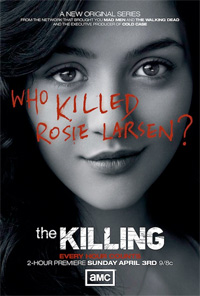
Why Netflix and DirecTV Probably Don’t Actually Want The Killing

Last week, TV Line’s Michael Ausiello reported that DirecTV and Netflix were in talks to pick up a third season of The Killing, and boy did the Internet take it seriously.

Willa Paskin wrote at Salon that “metaphorically speaking, the news that both DirecTV and Netflix are considering reviving “The Killing” for a third season is like hearing that the Coca Cola Co. is plotting to relaunch New Coke or that a fringe group of Democrats are drafting Michael Dukakis to run in this next election— a confounding plan to resurrect a total failure.”

Andy Greenwald wrote at Grantland that “As insane as it may sound to those of us who have had our fill of the grief-wracked Larsens and the Batman-voiced Richmond, the reports aren’t entirely surprising. An established show like The Killing is attractive to up-and-coming content farms like Netflix and DirecTV for precisely the same Rumsfeldian reasons it was nearly rescued yet again by Collier: It’s a known known.”

While Paskin and Greenwald both mount compelling takes on the implications of a scenario in which either of these outlets were to resurrect The Killing, I can’t help but feel that they suffer from the same flaw: believing that Ausiello’s report actually indicates Netflix or DirecTV have any serious intentions of picking up The Killing.

Earlier today, I published a piece at Antenna indicating that I believe the real story here is less about Netflix, DirecTV and The Killing, and more about the active campaigning on the part of Fox TV Studios to get the show picked up by leaking reports of early negotiations to Ausiello in order to gain leverage:

Save “Their” Show”: Public Appeals of Studio Campaigning [Antenna]

It is possible to view these stories as a reflection of the expanding influence of streaming services and other emerging distribution models, with new options for shows that were already canceled (Arrested Development’s return on Netflix) or compromises that may allow a show to stay on the air longer (like DirecTV’s adoption of Friday Night Lights). However, while the existence of these networks and these precedents provide the conditions necessary for these stories to emerge, the stories instead reflect the increased agency and the increased activity of production studios within this new television economy: as opposed to fans seeking legitimation through news coverage, it is now studios working to gain visibility through their relationship with journalists.

I will admit this is predicated on speculation, but it’s part of a larger trend this season in which vague reports of negotiations are seemingly floated to journalists who then report the news in an effort to draw in the theoretical fan audiences who could flock to the site to show their support for such a move. The fact that none of the show’s suggested for resurrection—Pan Am, Terra Nova, The River—have been picked up doesn’t mean that no negotiations ever existed, but it does indicate that whatever negotiations were reported on were perhaps less serious than reports may have indicated. “The Killing May Be Renewed For Season 3—Netflix and DirecTV in Talks” sounds really exciting until you realize that “talks” could amount to a brief phone conversation, and the show may be no closer to being picked up than it was when Fox was looking for theoretical suitors immediately after AMC canceled the series.

I go into more detail on the larger implications of this trend within the piece, pushing us to consider the role of production studios more carefully, but I also wanted to expand on something I tweeted about last week, which is whether or not Netflix and DirecTV actually wants to be part of these stories, or whether their involvement is a case of wish fulfillment on the part of TV Studios. Hint: it’s the latter.

Continue reading

4 Comments

Filed under The Killing