

“The Doctor’s Wife”
May 14th, 2011
It isn’t exactly news that Steven Moffat’s Doctor Who is expressly interested in the poetic: between The Girl Who Waited, The Boy Who Waited, and the tragic love story of the Doctor and River Song, Moffat’s world is filled with characters whose relationships are defined by strong emotional hooks. Even when the show built towards the fifth series’ grand finale, watching as the Doctor is slowly erased from time as he rewinded through the events of the series, it all turned into one big poetic moment where the “Old, New, Borrowed and Blue” story began to make so much more sense.
“The Doctor’s Wife,” scripted by acclaimed author Neil Gaiman (my relationship to whom I will discuss after the jump, is a truly wonderful outing on a large number of levels, but it’s the poetry of it all that makes it work. There’s a point early on where the Doctor can’t come up with a proper analogy to explain their location “outside of the universe” to Amy and Rory, and that’s very much part of Moffat’s approach: we don’t need to know what it means or how it works, all we need to know is what it means.
Or, rather, all we need to know is that we enjoyed the bloody hell out of it even though we’ve still got a whole lot of questions.
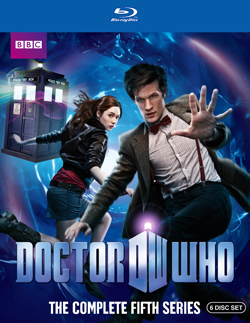 Last week, Craig Ferguson dedicated almost an entire episode to a television show. Now, this isn’t entirely uncommon in television talk shows, but it’s normally someone like Oprah searching for the zeitgeist by introducing the cast of Glee or something. Ferguson, meanwhile, wasn’t chasing the zeitgeist so much as he was chasing the T.A.R.D.I.S., dedicating an entire hour to British sensation


 Cultural Learnings