Offsite Learnings: Cinemax’s Strike Back at The A.V. Club

Offsite Learnings: Cinemax’s Strike Back

August 31st, 2012

In the midst of completing a busy summer academically, I took on the task of reviewing Cinemax’s Strike Back week-to-week at The A.V. Club, which has been a nice chance to explore a show I enjoy quite a bit. I figured I should let those of you who continue to follow the blog and not my Twitter account know about it, and offer up an exclusive clip from tonight’s fourth episode of the second season; you can find my review of that episode right after it airs at The A.V. Club.

Review: Strike Back Season 2 – “Episode One”/”Episode Two”

Review: Strike Back Season 2 – “Episode Three”

Clip: Strike Back Season 2 – Stonebridge and El Soldat Negotiate

Leave a comment

Filed under Strike Back

Why Netflix and DirecTV Probably Don’t Actually Want The Killing

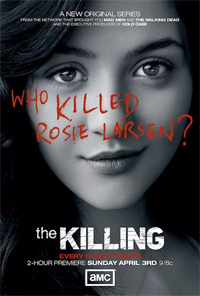
Last week, TV Line’s Michael Ausiello reported that DirecTV and Netflix were in talks to pick up a third season of The Killing, and boy did the Internet take it seriously.

Willa Paskin wrote at Salon that “metaphorically speaking, the news that both DirecTV and Netflix are considering reviving “The Killing” for a third season is like hearing that the Coca Cola Co. is plotting to relaunch New Coke or that a fringe group of Democrats are drafting Michael Dukakis to run in this next election— a confounding plan to resurrect a total failure.”

Andy Greenwald wrote at Grantland that “As insane as it may sound to those of us who have had our fill of the grief-wracked Larsens and the Batman-voiced Richmond, the reports aren’t entirely surprising. An established show like The Killing is attractive to up-and-coming content farms like Netflix and DirecTV for precisely the same Rumsfeldian reasons it was nearly rescued yet again by Collier: It’s a known known.”

While Paskin and Greenwald both mount compelling takes on the implications of a scenario in which either of these outlets were to resurrect The Killing, I can’t help but feel that they suffer from the same flaw: believing that Ausiello’s report actually indicates Netflix or DirecTV have any serious intentions of picking up The Killing.

Earlier today, I published a piece at Antenna indicating that I believe the real story here is less about Netflix, DirecTV and The Killing, and more about the active campaigning on the part of Fox TV Studios to get the show picked up by leaking reports of early negotiations to Ausiello in order to gain leverage:

Save “Their” Show”: Public Appeals of Studio Campaigning [Antenna]

It is possible to view these stories as a reflection of the expanding influence of streaming services and other emerging distribution models, with new options for shows that were already canceled (Arrested Development’s return on Netflix) or compromises that may allow a show to stay on the air longer (like DirecTV’s adoption of Friday Night Lights). However, while the existence of these networks and these precedents provide the conditions necessary for these stories to emerge, the stories instead reflect the increased agency and the increased activity of production studios within this new television economy: as opposed to fans seeking legitimation through news coverage, it is now studios working to gain visibility through their relationship with journalists.

I will admit this is predicated on speculation, but it’s part of a larger trend this season in which vague reports of negotiations are seemingly floated to journalists who then report the news in an effort to draw in the theoretical fan audiences who could flock to the site to show their support for such a move. The fact that none of the show’s suggested for resurrection—Pan Am, Terra Nova, The River—have been picked up doesn’t mean that no negotiations ever existed, but it does indicate that whatever negotiations were reported on were perhaps less serious than reports may have indicated. “The Killing May Be Renewed For Season 3—Netflix and DirecTV in Talks” sounds really exciting until you realize that “talks” could amount to a brief phone conversation, and the show may be no closer to being picked up than it was when Fox was looking for theoretical suitors immediately after AMC canceled the series.

I go into more detail on the larger implications of this trend within the piece, pushing us to consider the role of production studios more carefully, but I also wanted to expand on something I tweeted about last week, which is whether or not Netflix and DirecTV actually wants to be part of these stories, or whether their involvement is a case of wish fulfillment on the part of TV Studios. Hint: it’s the latter.

Continue reading

4 Comments

Filed under The Killing

Re-Lived Liveness: NBC’s Tape-Delayed Olympics Commentary

While I’ve spent some recent late nights leaving lengthy comments over at The A.V. Club’s nightly Olympics coverage, where my colleagues have been breaking down each night of NBC’s Primetime coverage, I’ve largely avoided more formal writing in the interest of academic pursuits (in this case studying for preliminary exams).

However, today was the first time I watched an event—the 10m Men’s Platform Diving Finals—in its entirety live during the day and then watched the same event during the evening session, and so I wanted to expand on a few tweets I sent out that rest on a few educated assumptions and general frustrations with the temporal wonkery of NBC’s Tape Delay strategy.

Continue reading

6 Comments

Filed under Olympics

Unheard and Unheralded: White Collar’s Problems with Class (and Beyond)

White Collar’s Problems with Class (and Beyond)

July 25th, 2012

White Collar is a show about the elite chasing down the elite. While representing the government, the white collar bureau of the FBI is hardly recognizable as even middle class given that our vantage points are the well-off Peter Burke and the globe-trotting criminal Neal Caffrey. Meanwhile, the people they track down are often business men or men of power, people who have private security firms and operate in high-rises as opposed to slums, meaning its New York City setting is pretty well limited to the most affluent of the boroughs.

However, this only makes the show as classist as most television programming, which tends to focus on the wealthy and well-off as opposed to those of a lower class. USA’s lineup is filled with other examples, whether it’s Royal Pains (where Hank, despite struggling financially to begin the show, is placed in the lifestyle of the wealthy Hamptonites to quickly erase his relative poverty), or Covert Affairs (where Annie lives in her sister’s guest house), or Burn Notice (where Michael, despite having no money to his name, transforms his warehouse-living existence into a sign of humility as opposed to destitution), or Necessary Roughness (where “money problems” mean the slow erosion of college funds by a frivolous ex-husband while continuing to work as a high-paying therapist to wealthy clients), or…well, you get the picture.

However, we’re conditioned to accept the inherent classism of television content, so it’s unlikely these shows resonate as particularly offensive. The past few weeks of White Collar, however, have more directly addressed or failed to address the lower class in their storytelling, and I’ve come to the point where I felt the need to comment on it. Since my off-handed Twitter remark picked up some response, I wanted to expand on it briefly to explain where the show has gone wrong in its evocation of the lower class at the start of its fourth season, and why the show’s “elite” DNA is more capable of addressing issues of class than its execution would suggest.

Continue reading

19 Comments

Filed under White Collar

Bunheads – “Movie Truck”

“Movie Truck”

July 24th, 2012

The concluding scene in “Movie Truck” is offered without any context, a coda in which Sasha performs a dance routine to a They Might Be Giants rendition of “Istanbul.” While the episode has a number of key revelations for Sasha as a character, none of them particular tie into that song, or that performance, and even the co-writer of the episode (Beth Schacter) admitted on Twitter that it was, well, “weird” (in addition to other adjectives).

However, it was a bit of weirdness earned by an episode that did a lot of things right, perhaps because of the fact that the show was finally allowed to breathe without Fanny there to suck the air out of things. When Kelly Bishop was only listed as a guest star in the early going, it felt like a death knell for the series, making it that much easier to jettison the mother-/daughter-in-law storyline in favor of the young teens closer to ABC Family’s target demographic. And yet while I continue to like Kelly Bishop’s performance, the show’s rhythms felt much stronger when she was off vacationing than when she was largely serving as an obstacle for Michelle to overcome.

Continue reading

7 Comments

Filed under Bunheads

An Animated Adventure Into Adolescence: Disney’s Gravity Falls

An Animated Adventure Into Adolescence: Disney’s Gravity Falls

July 21st, 2012

This summer, The A.V. Club’s “Summertime Roundtable” group has shifted their focus from a single show, seminal sitcom Cheers, to episodes of various shows centered around the theme of adolescence. The pieces have been a real highlight of the summer months at the site, foregrounding theme but also emphasizing the way in which genre plays a role in how that theme is understood within serials and sitcoms alike (along with other variations on genre, of course).

And yet as I think about adolescence—and growing up in general—it strikes me that kids’ perception of these terms is less and less likely to come from broadcast programming like Boy Meets World—a show that I grew up with—or The Wonder Years. While the stray network series is “family friendly,” that programming niche has largely moved onto cable networks like Nickelodeon and the Disney Channel. While these are not “new” channels exactly, and I had equivalents—in YTV and the Family Channel—growing up in Canada when I was younger, they have grown into massive franchises and highly successful programming blocks in recent years. While this is logical given the increasingly savvy nature of young viewers who surfing online or asking their parents to download iPhone apps, it also means that innovations are happening in “Kids TV” during the same period at which I feel the most disconnected from “Kids TV”: as a twenty-something, trapped between childhood and potential parenthood, my channel surfing rarely gravitates toward those channels.

However, occasionally something tips your hat that sends you in that direction. Academically, teaching about children’s TV meant diving into the world of The Hub’s My Little Pony: Friendship is Magic—and yes, bronies—and Nickelodeon’s iCarly, while personally it often becomes a matter of seeing someone else diving in. And it is this that led me to Gravity Falls, a Disney Channel animated series from Alex Hirsch. My pal Eugene Ahn, also known as nerdcore rapper Adam Warrock, started littering my Twitter feed with enthusiastic remarks about the series, and it soon became one of his wonderful pop culture raps:

Not one to ignore such enthusiasm, and always looking for something to serve as a short distraction from a summer of studying, I started recording the aired episodes—which is easy given how often the Disney Channel strip schedules their shows, although new episodes air on Friday nights—and digging into the series. While I had seen a few commercials for the show, and knew its basic premise, I had been in Canada when it premiered, and so I hadn’t followed any of the early responses (which included a review from The A.V. Club’s Alasdair Wilkins), and so I got to be pleasantly surprised at how charming, fun, and generally hilarious the series has been thus far.

And while I have some more traditional “TV Critic” reasons why the show has been so successful, I think the theme of adolescence is a key part of its success, and the kind of show I wish I had when I was Dipper and Mabel’s age.

Continue reading

1 Comment

Filed under Gravity Falls

Fleeting Footholds: The 2012 Primetime Emmy Nominations

The 2012 Primetime Emmy Nominations

July 19th, 2012

While Cultural Learnings has certainly been put on the backburner as I spend my summer studying, my willpower to keep myself from writing about television is at its weakest during Emmy season. While you would think that an early analysis of the leadup to the nominations and a piece on the nominations itself—focusing on Downton Abbey’s successful transition to the Series category—over at Antenna would be sufficient, I found myself hitting the site’s word count limit while still having a whole collection of narratives left to play out.

Accordingly, there are two points I want to make here. The first is the way in which this year’s awards demonstrate the capacity for a show to fall completely off the radar, and the other is what this year’s awards mean for the different networks and channels who are always looking to retain a footing within the race for nominations.

Continue reading

1 Comment

Filed under Emmy Awards

Cultural Interview: Awkward. Creator/Showrunner Lauren Iungerich [Part Two]

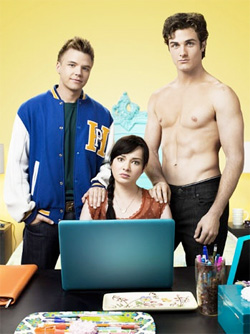
Awkward. has been successful with MTV’s key market, drawing significant fan response for its relatable teen characters among young female demographics. It’s a show that fits comfortably into expectations for a show in the age of social media, eminently hashtaggable, and it’s become a key cornerstone in the channel’s original programming efforts.

However, it would be wrong to reduce Awkward. to its hashtags. In a diverse first season, creator/showrunner Lauren Iungerich explored a wide range of storylines, balanced characters from different age groups, and successfully managed to keep a love triangle from becoming either a foregone conclusion or a waste of time.

In this second part of my conversation with Iungerich—you can find Part One here—we explore what worked in Awkward.’s first season, how that’s changing in the second season, and a slight digression into the show’s southern California setting.

Is there a story in Awkward.’s first season that you felt best captured the show you were trying to make? The moment where it all clicked for you?

LI: The moment in “Queen Bee-atches” with Sadie, where we really sort of humanize her, where we understand her powerlessness to her weight, was something I was really proud of. The moment in “Fateful” where Lacey gives her daughter that dress, that sort of recognition of acceptance of her kid, and realizing she had made a lot of mistakes. The journey of Lacey in the first season was about going through the five stages of grief, and that was her coming to that phase of acceptance, of realizing how much she loved her daughter, and how precious she was. In “My Super Bittersweet Sixteen” when Matty shows up at the back door on her birthday, on this terrible birthday, and wants to be more than her friend. That is such a romantic tenet. And Dead Stacy [in “Over My Dead Body”], being able to take something and not make a particular TV trope, to do something that hadn’t been done before. That’s a real tenet of our show: we try not to do anything that’s super tropey.

Continue reading

4 Comments

Filed under Awkward.

Cultural Interview: Awkward. Creator/Showrunner Lauren Iungerich [Part One]

When Awkward.which I cover for The A.V. Club, and which returns on Thursday at 10:30/9:30c on MTV—made its debut on MTV last year, creator Lauren Iungerich was transformed from a television writer into a television showrunner. While recent events have led many publications to shine a light on the rise of female showrunners and/or creators within television, Iungerich has unfairly flown under the radar in those conversations. Working outside of the network system with a cable channel still searching for its identity in original scripted programming, Iungerich was given something that some other creators aren’t given: the opportunity, and the challenge, of playing the role of showrunner for her first series.

I had a chance to chat with Iungerich last week, and I’ll be sharing that interview in two parts. The first part, found below, details her experience as a first-time showrunner, her approach to Awkward.’s development, and her plans for its evolution—accordingly, it may be of interest even to those who haven’t watched the MTV series. Meanwhile, part two of the conversation—which is now up—will focus more specifically on the series itself as it heads into its second season, with topics including the show’s central love triangle and its Palos Verdes setting in California.

Given that this was your first time as a “showrunner,” how did it compare to your expectations?

Lauren Iungerich: It was way harder. [Laughs] What’s hard about being a showrunner—to break it down, there are two things that are really tough. First, you can’t just be the artist: you also have to be the producer, so it’s like art and commerce get mixed together so you have to be fiscally responsible; you have to really work with your network to make sure you can really produce the show and yet at the same time maintain the artistic integrity of your vision. And those are two things that sometimes don’t work in concert with each other.

Continue reading

2 Comments

Filed under Awkward.

Bunheads – “Inherit the Wind [And the Fast-Talkin’ Style]”

“Inherit the Wind”

June 25th, 2012

I haven’t weighed in on Bunheads in any official capacity to this point, although I’ve been watching it and largely enjoying it. The pilot left unanswered questions, and the two episodes since then (“For Fanny” and this week’s “Inherit the Wind”) have done a pretty good job of answering them.

On some level, that covers my basic evaluation of the show, but tonight’s episode raised two points for me about the viability of the show’s future. One has to do with Sutton Foster, who is tasked with a lot of heavy-lifting as the audience’s surrogate into this small town, and the other has to do with the style of dialogue that she and the rest of the cast have to deal with. As much as I largely enjoyed “Inherit the Wind,” and liked some of its larger moves toward stability, I think there’s still something about the show that doesn’t sit right without outright sitting wrong – and, apropos of tonight’s episode title, it’s partly something the show inherited.

Continue reading

5 Comments

Filed under Bunheads