Cultural Catchup Project: Pulling Back the Curtain (Buffy the Vampire Slayer)

Pulling Back the Curtain

June 23rd, 2010

You can follow along with the Cultural Catchup Project by following me on Twitter (@Memles), by subscribing to the category’s feed, or by bookmarking the Cultural Catchup Project page where I’ll be posting a link to each installment.

I’ve talked a bit along the way about the notion of spoilers as it relates to watching these series. I know enough about Buffy as a whole that there are certain things I have unknowingly committed to memory which have effectively spoiled certain elements of the series. For example, I distinctly remember a marathon of the “Top 10” Buffy episodes that my brother taped on television at some point early in the decade, and during that time I remember seeing bits and pieces of “Hush,” and “Once More with Feeling!” As a result, there are certain images etched in my mind, in some cases mistakenly (as we learned when I thought it was Cordelia with Xander in “Once More with Feeling”) but in all cases meaningfully. For better or for worse, Buffy’s substantial cultural capital meant that there were things about the show I internalized without fully understanding the context.

In some ways, the Cultural Catchup Project is a dangerous way to watch the show if I’m concerned about further spoilers, but in reality nothing that has been “revealed” by the comments on these posts hasn’t been fairly clearly choreographed by other signifiers. While I remain wary of substantial plot spoilers which may not be so easily predicted, it is only inevitable that watching a series which aired a decade ago and doing so with an observational eye will undoubtedly reveal things that may have surprised other viewers at the time.

So long as the show around them remains entertaining, as it does when Joss Whedon and Co. finally pull back the curtain on Buffy’s fourth season in “Wild at Heart” and (particularly) “The Initiative,” all these subtle spoilers will do is alter the experience from one of shock and surprise to one of appreciation and curiosity. It may not be the same, but it is not definitively less rewarding either, indicating how no one person will view a series in an identical fashion as any other.

Continue reading

78 Comments

Filed under Cultural Catchup Project

Cultural Catchup Project: “The Harsh Light of Day”/”In The Dark” (Buffy and Angel)

“The Harsh Light of Day”/”In the Dark”

June 22nd, 2010

You can follow along with the Cultural Catchup Project by following me on Twitter (@Memles), by subscribing to the category’s feed, or by bookmarking the Cultural Catchup Project page where I’ll be posting a link to each installment.

I don’t think the crossovers were really a huge part of my decision to watch Buffy and Angel simultaneously at the end of the day, but they certainly helped justify the decision. The idea of doing crossovers is logical for the two series, airing back-to-back as they were, but I’ll admit that watching “The Harsh Light of Day” and “In the Dark” makes me wonder just how crucial watching this particular crossover together really is. In fact, I’d go so far as to call it highly unnecessary, although I’ll admit that there’s some interesting storytelling within the connection.

I want to talk a bit about how the Gem of Amara serves as a crossover element, but I also want to discuss how each show’s respective seasons are shaping up a few episodes in. At this point, Whedon needs to be careful about crossovers, as Angel needs to be establishing its own identity rather than relying on its connections with Buffy. As a result, “In the Dark” is less a continuation of “The Harsh Light of Day” and more a spin-off of its central plot element in order to tell a different story with more weight for Angel and the future of his series. The result is two episodes that are connected, yes, but are primarily continuations and introductions of key themes moving forward into independent, rather than connected seasons.

This doesn’t mean that there’s no value in watching them together, but it does mean that I don’t consider it a necessity.

Continue reading

50 Comments

Filed under Cultural Catchup Project

Treme the Morning After: Critical Arcs Conclude with “I’ll Fly Away”

Treme the Morning After: Critical Arcs Conclude with “I’ll Fly Away”

June 21st, 2010

In Alan Sepinwall’s fantastic interview with David Simon about Treme’s first season, Simon was particularly animated about those who argue that Treme is a show light on plot. In an amendment to the earlier interview (which Simon requested to add during a subsequent conversation), Simon says the following about the criticism of the show:

When they start to sort of evaluate the arc that they can’t know, the story arcs themselves, even if they’re loving it, I just can’t take it seriously. Nobody knows what we’ve built until the end. In some ways, even though we’ve planned it out and know where we’re going, until we look at the last edit of the last episode and send it off – that’s the only point where we can look at it and go, “This worked really well, this not so much.” Until then, you can’t really tell. That’s what I was trying to say. I was not trying to say I do not take criticism seriously. Obviously, anybody who gets to the end and says, “I don’t think this worked,” that’s entirely legitimate. But I can’t take seriously stuff in the middle. It’s like reading a book report in the middle. Not to say there isn’t valid commentary about the process. Just not about arc.

Writing about Treme has been a distinct challenge (as Scott Tobias mentioned in this A.V. Club Crosstalk with Noel Murray) for those of us who write about television on a week-to-week basis, largely because “arcs” are one of the primary ways in which we evaluate individual episodes. What Simon is arguing is that it’s not really possible to evaluate an arc until it reaches its conclusion, and that while critics can like/dislike certain characters, or moments, or direction, they can’t like or dislike the story arc until they discover how it ends. In the case of Treme, these arcs were elusive on a good day and near non-existent on others, and so their presence or absence became a key part of these reviews despite Simon’s concerns.

I have a great deal of respect for Simon, and I’ll agree that he is in no way suggesting that criticism isn’t a worthwhile venture. However, I think that the “stuff in the middle” has been an important glimpse into how critics, and viewers, have been watching the series. A critics’ analysis of an individual season of television is not unlike the first season of Treme, building momentum and information until eventually reaching a conclusion: at no point do critics use individual reviews to offer definitive opinions on a storyline, their responses to episodes standing as evidence of their emotional and critical reaction to the series which build towards an eventual judgment on how the season has progressed. While a story should ultimately be judged once it has concluded, there is nothing wrong with reacting to that story as it unfolds, and critics have simply documented the ways in which they’ve responded to the series both positively and negatively over the course of a season. Even if those concerns are eventually washed away by a strong finale, or if their opinions change through the course of the year, this doesn’t mean that we should take earlier reviews less seriously: instead, we should see them as a dialogue with the text, valuable not in offering a definitive judgment of particular storylines but rather in terms of capturing the way viewers are experiencing the series as it unfolds week-by-week.

As critics confront “I’ll Fly Away,” they draw back on some of their early misgivings in order to properly elaborate on their perspectives, giving the show credit for pulling some storylines together while criticizing the show for potentially missing some opportunities with others. Simon is right that arcs can be judged prematurely, but I think critics have a responsibility to reflect the fact that watching a David Simon series requires a degree of patience that only monks could pull off without difficulty, and that while they will ultimately wait to pass judgment on the series they will have their moments of doubt which should be reflected in their reviews. While Simon is likely right that Treme (like The Wire) would benefit more from a Sepinwallian post-series rewind to these earlier episodes within the context of the broader story, critical commentary of the experience of watching Treme is valuable insight into how the arc is being read by viewers as it progresses, which is ultimately how we primarily watch television.

So as the internet’s television critics offer their views on Treme’s first season finale, all of those who have been writing about the show with some regularity acknowledge the ways in which their opinions have changed and how arcs have or have not come together, acknowledgements we can understand and see for ourselves in reading their intelligent analysis of the season’s individual episodes. As television become a more collective experience in the internet age, viewers want to be able to become part of critical communities which analyze episodes of a show like Treme and create discussion surrounding its relationship with history, its characters, its direction and, yes, its story arcs. And while writing about the show has at times been a challenge, the “stuff the middle” created intriguing conversations which extended the series’ impact beyond its individual segments, building towards a more thorough and definitive conversation to be held now, after the season has come to a close.

While I will agree with Simon that now is when the real analysis can truly take place (and has been taking place, as you’ll see from the reviews I’ll link to after the break), I wouldn’t want to have lost the dialogues which emerged throughout the season, if only because I can’t imagine how long my already ludicrously long review would have been if I had held it all in – while Simon’s concern is not entirely misplaced, the experience of Treme was better for the discussions which emerged from critical reviews, and so long as critics continue to reserve judgment within their analysis of individual episodes I will continue to take them seriously in the future.

Continue reading

1 Comment

Filed under Treme

Season Finale: Treme – “I’ll Fly Away”

“I’ll Fly Away”

June 20th, 2010

“I’m just a player.”

I’ve fallen into an unfortunate trap over the past month or so with Treme, and it’s quite a common one: with a show this dense and devoid of traditional plot development, and where the professional critics are receiving screeners and I am, well, not, I haven’t been able to work up the drive to write about the episodes when I’ve been seeing them a few days late every week (as a result of the conflict with Breaking Bad, which was so great this season). I’d hate for this to be read as a slight on the series as a whole, but I do think that I’ve avoided writing about it because I’ve felt uncomfortable offering a verdict on how the series has progressed.

I think what I’ve discovered is that Treme is constantly defined by fallout, both in terms of the overarching impact of Hurricane Katrina and the individual tragedies and events which define each character’s journey. When something happens on Treme, like the conclusion of last week’s penultimate episode, the real interest for David Simon and Eric Overmeyer seems to be the consequences. The Wire’s finales were always denouements, but Treme has been one long denouement from the destruction caused by Hurricane Katrina, and living within that space has taken these characters to some dangerous places and created consequences that will not end with tonight’s season finale. While The Wire was interested in how one small decision or one bureaucratic inefficiency could snowball into tragedy, Treme captures the spirit of a city fighting to overcome inescapable tragedy, and the result has been some great television.

“I’ll Fly Away” is a powerful and riveting finale, one which emphasizes the central notion of how these individuals fit into the world around them. Treme is filled with characters who either struggle against the script they’re given (the creators) or who simply play the sheet music placed before them (the players), and after Katrina hit New Orleans everyone was forced to ask how far they would follow their desire to take control of their own future, and at what point they would simply let themselves be washed away by the storm’s aftermath towards a new path in life. At the conclusion of Treme’s first season, we see numerous characters reach the point where they’re forced to make a choice, and yet it is never presented as a judgment (either positive or negative) on New Orleans culture.

Regardless of whether these characters choose to fly away or stay in New Orleans until the bitter end, they will always love this city, and that infectious love is so apparent in the production of this series that no amount of tragedy can outweigh the strength of spirit shown in these opening episodes. While the series’ highly recognizable subject matter could have overwhelmed the individual characters that Simon and Overmeyer have created to populate their historical fiction, these characters have instead become a powerful way in which we as an audience come to understand the life of New Orleans, and the sheer weight that they were forced to carry once Katrina hit the Gulf Coast and the levees broke.

And Treme is that much more accomplished for carrying that weight with such confidence.

Continue reading

4 Comments

Filed under Treme

Series Finale, Part One: Doctor Who – “The Pandorica Opens”

“The Pandorica Opens”

June 19th, 2010

As a newcomer to Doctor Who, one of the challenges I’ve had to face in terms of writing about the series is what to do with its two-part episodes. In particular, there’s a distinct challenge with writing about the first part of those episodes, as Doctor Who tends to quite literally split narratives in half as opposed to telling two connected stories. As a result, the first half tends to be fairly heavy on exposition and setup before the second half brings it all to a resolution: while this means that there is plenty to speculate on about the first episode, it’s tough to offer a critical opinion when so much of the two-parter’s effectiveness depends on how it concludes.

[Note: this seems as good a time as any to link to Scott Tobias and Noel Murray’s fantastic conversation about the challenges of writing about television at The A.V. Club – I’d add “two-parters” to their list of confounding situations for television critics who write about television on a weekly schedule, although they are not particularly common in this day and age.]

I’ve gotten away with it so far this season by either writing about episodes from previous series (catching up with the Weeping Angels and River Song in my review of “The Time of Angels”) or catching up on previous episodes in this series (lumping reviews of “Vampires of Venice” and “Amy’s Choice” in with “The Hungry Earth”), but with “The Pandorica Opens” (the first part of the series finale) I knew that there was no such cheat available, which meant that the episode was either going to lend itself to instant analysis or it wasn’t.

There are times when I write about episodes of television because I feel I have something to say, or because I want to start or continue a conversation, but there are other times when I simply feel as if I need to write about something so as to be able to even come close to being able to wrap my head around it. “The Pandorica Opens” is one such episode, a first-part which wastes no time drawing a clear (and quite ingenious) connection between this story and the ongoing series narrative and in the process leaves me enormously confused in the best possible way.

Continue reading

15 Comments

Filed under Doctor Who

Cultural Catchup Project: New Beginnings in “The Freshman” and “City Of” (Buffy and Angel)

New Beginnings in “The Freshman” and “City Of”

June 19th, 2010

You can follow along with the Cultural Catchup Project by following me on Twitter (@Memles), by subscribing to the category’s feed, or by bookmarking the Cultural Catchup Project page where I’ll be posting a link to each installment.

It’s only fitting that, as Buffy and Angel’s paths diverge into two separate series, the Cultural Catchup Project forces them back together for the sake of analysis.

There is no plot-based connection between “The Freshman,” Buffy’s fourth season premiere, and “City Of,” Angel’s “pilot” of sorts which started off its first season: while there is a brief moment shared between the two episodes, it is an easter egg more than a substantial development. However, both episodes tell more or less the same story: our protagonist moves onto a new stage in their life in an unfamiliar location and struggles to reconcile their past life with their present situation.

In that sense, both episodes serve the function of a pilot: while “The Freshman” isn’t debuting a new series, it is ushering in a new era for Buffy, as she heads down the road to UC Sunnydale and discovers that it is truly a “whole new world” in more ways than she bargained for. And “City Of,” while unique in that Buffy viewers have a greater understanding of Angel and Cordelia’s characters than those tuning in for the first time, still needs to introduce Angel’s current goals and set up just what kind of show Angel wants to be.

And while both episodes were entertaining, I’m going to make the argument that neither of them were actually that successful when considered as the beginning of their respective seasons.

Continue reading

82 Comments

Filed under Cultural Catchup Project

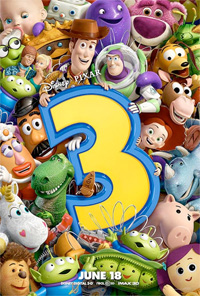
Rumination vs. Revelation: Pixar, the Remarkable, and Toy Story 3

It’s not often I write about movies in this neck of the woods, but it’s hard not to use Cultural Learnings as an outlet for my thoughts about Toy Story 3. Not only is this a Pixar film, but it’s a Pixar film which deliberately taps into my childhood nostalgia: I was 9 when Toy Story was released, and 13 when Toy Story 2 hit theatres, so this is arriving at a time when that sort of nostalgia is both most welcome and most intellectually stimulating (as I’m considering culture and the media I consume in a much more critical fashion than I was back then).

Toy Story 3 is a solid sequel to the second film, and a wonderful conclusion to the cinematic trilogy, but I personally feel as if it is the least successful (relatively speaking, of course) of the three films when separated from our nostalgia and the emotional resonance the series has accrued over time. Whereas there are moments in this film which are more powerful than those which came before, and Pixar continues to separate itself from the pack by tapping into the audience’s emotional connection with this franchise in a fashion which has eluded Dreamworks with Shrek, Toy Story 3 is the first in the trilogy to feel repetitive, albeit in a purposeful fashion designed to emphasize key themes from the second film which become more complex in the context of the third.

Considering this is Pixar, they pick the right themes and execute them to perfection when the time comes to bring the series to its cinematic close, but there is a lack of discovery within the film’s adventure, establishing it as an extremely engaging rumination more than a revelation – what will follow is my attempt to explain why I’m not head over heels in love with the film as a whole even after being head over heels in love with its conclusion.

[I went a few paragraphs without any major spoilers, but then I sort of throw all caution to the wind, so if you haven’t seen the movie yet I’d suggest bookmarking this until then, and you’ll have something to read after getting back from the theatre.]

Continue reading

6 Comments

Filed under Cinema

All-Stars, No Story: Confusion reigns over So You Think You Can Dance Season 7

All-Stars, No Story: SYTYCD Season 7

June 16th, 2010

When it was announced that So You Think You Can Dance would be changing its structure for its seventh season, in theory there shouldn’t be any complaints: after all, many of the show’s fans were frustrated by the sixth season, where the series felt stale for the first time. However, that staleness wasn’t really the result of the show’s structure so much as the decision to schedule the series in the fall (only weeks after the fifth season ended) and an unfortunate new stage which sucked some of the life out of the series. We were suffering from fatigue more than anything else, and while some small changes could bring us back to the franchise it seems as if Nigel Lythgoe decided to throw the baby out with the bathwater.

While we’ve known for a while that the series was throwing out its Top 20 structure and going with a Top 10 (in fact a Top 11) and teaming up the individual competitors with All-Stars from previous seasons, it wasn’t entirely clear just how that would work. The show is still a collection of 11 dance routines as it was before, but there are newfound conflicts in who we’re supposed to be paying attention to (the competitor or the All-Stars), and with Mia Michaels sitting in for Mary Murphy there is simply something different in the air.

And it’s proving to be, at least right now, a diversion from what used to make the show so engaging – while my choice of title may make it seem like the problem is that the show is focusing too much on the All-Stars (I couldn’t resist the play on No Guts, No Glory), the truth is that they didn’t focus on the all-stars at all, which is even more distracting and confusing for audiences and judges alike.

Continue reading

4 Comments

Filed under So You Think You Can Dance

Off-Site Learnings: Glee’s Impact on Television Development

I was in transit when last week’s episode of the (excellent) Firewall and Iceberg podcast was posted, and during that trip I wrote a piece for Jive TV which discussed what Glee’s impact will be on television development; little did I know that Alan and Dan had discussed the same issue during that episode, which makes my piece a response of sorts to their comments.

It’s ultimately in agreement: Glee’s legacy will not be the renaissance of the high school comedy nor the arrival of the television musical. However, I would argue that there are more essential, rather than definitional, elements of the series which could inspire future development, allowing networks to tap into what makes Glee so successful without necessarily selling iTunes downloads or breaking out into song.

For more on the subject, check out “Has U.S. TV been Forever Changed by Glee?” at Australia’s Jive TV:

However, what remains to be determined is how much Glee has changed the television industry: while the success of a show like Modern Family can be billed the renaissance of the family sitcom, it’s not quite so easy to identify what other networks will attempt to emulate within Glee’s central premise. There isn’t going to be a sudden influx of musicals on television, as Glee’s most definitive quality is too unique on the current television landscape to be copied in such a blatant fashion; that being said, networks will still want to try to capture the elusive “Glee audience” that FOX has built over the past year, and they’re going to try to find a way to do it as soon as possible.

Leave a comment

Filed under Glee

Sneak Preview: Rubicon – “Gone in the Teeth”

“Gone in the Teeth”

June 13th, 2010

AMC has officially dubbed their airing of Rubicon’s pilot a month and a half ahead of its premiere as a “sneak preview,” but I think a “teaser trailer” may be a more accurate description of the episode in question. A good teaser trailer shows you atmospheric scenes which give you a sense of the mood a particular movie or television series is going for, but really doesn’t tell you much about the plot in question: for example, HBO’s teaser trailer for Game of Thrones, the much-anticipated adaptation of George R.R. Martin’s A Song of Ice and Fire, shows a few key images and establishes the series’ tagline.

Considering this, it’s fair to say that my use of the designation for “Gone in the Teeth” is symptomatic of my frustration with the enigmatic lack of clarity which pervades this series. If a show’s pilot is supposed to be a teaser trailer, an aesthetic exercise designed to build hype, then I would consider this to be moderately successful: there was absolutely nothing here which would keep me from tuning into the series in August. However, a pilot needs to be something more than a teaser trailer, and the series’ shortcuts in establishing both its central character and its central conspiracy show a lack of elegance which does little to convince me that this belongs in the same breath as AMC’s other original series.

Continue reading

6 Comments

Filed under Rubicon