Tag Archives: Television

Chuck – “Chuck vs. the Final Exam”

“Chuck vs. the Final Exam”

March 22nd, 2010

At its best, Chuck is a show where the stakes of a traditional spy show feel extraordinarily real: the whole point of the premise is that the things that happen in the show’s universe are dangerous and larger than life, but our protagonist is a regular guy who has a computer in his head that makes him a far more important asset than he was born to be. The show’s second season, where it reached the peak of its creative success, captured Chuck Bartowski coming to terms with the idea that being a spy might be what he was meant to be, and that there was the potential for the world of espionage to become “real” in a way he had never imagined.

But something went wrong at the start of the third season, to the point where I would argue that the show has diverged from the “real” not only in terms of believability (which isn’t new, considering the suspension of disbelief necessary in many of the spy stories) but also in terms of character. And while some would point to the Intersect 2.0 as a dehumanizing factor or the forced separation of Chuck and Sarah against the wishes of die-hard fans as reasons that the show is becoming less grounded, I would argue that it is something more substantial than that.

“Chuck vs. the Final Exam” is supposed to feel as if the stakes are higher than ever, even arguing that if Chuck fails this series of tests he will return to his normal life. However, it doesn’t feel like the stakes are higher than ever – things felt much more real, much more life-changing, when Chuck was reconciling family and country, when he was fighting for something beyond getting to be a “real spy.” The problem with this episode, and much of the third season, is that the struggle between who Chuck is and who Chuck is on the path to becoming has been said instead of shown, implied rather than demonstrated. And so rather than the show confidently or subtly introducing this tension, the show has thrown out the “real” Chuck and moved quickly and efficiently towards something that, while interesting, just isn’t as engaging.

It’s a move that would be necessary to cram this story into thirteen episodes, which may well be the root of my frustration with the show’s current trajectory.

Continue reading

3 Comments

Filed under Chuck

Season Premiere: United States of Tara – “Yes”

“Yes”

March 22nd, 2010

Last week, Kelli Marshall noted that I had never reviewed a single episode of United States of Tara, Showtime’s comedy series which debuted last year and which won Toni Colette a much-deserved Emmy award in September. This seemed surprising to me, considering that I had quite enjoyed the series upon its debut and had found its first season pretty uniformly solid. I am still not entirely sure why I never took the time to review any individual episodes of the show, but I can at least confirm that it had nothing to do with the quality of the series.

What I’ve always liked about the show is that it isn’t afraid to take its protagonist to some dark and disturbing places: while the show is ostensibly labeled as a comedy, it knows that the same premise (Tara’s multiple personalities) which begets that comedy is just as capable of swinging to the side of dramatic, and so T’s promiscuity goes from humorous to tragic, and Buck can conversely swing from embarrassing to oddly comforting. The show does not have separate spheres of comedy and drama, but rather different circumstances wherein its premise shifts to meet the needs of the story.

Based on the season premiere, it’s clear that that Diablo Cody and company are very aware of the delicate balance the show requires, and so you have what is effectively a dramatic premiere where comedy and drama (mostly) come from the same place of uncertainty and insecurity, setting the show up for an intriguing sophomore season that will, hopefully, find more space in the blog rotation.

Continue reading

1 Comment

Filed under United States of Tara

The Pacific – “Part Two”

“Part Two”

March 21st, 2010

The Pacific is a show designed to tell the story of a war through the story of three men, but sometimes this isn’t a particularly easy task. Sometimes war is about the inhumane, the loss of identity and humanity amidst absolute chaos, at which point following characters seems almost counterintuitive. In other moments, meanwhile, conflicts become entirely personal, becoming disconnected from the “why” of the war and the big picture and becoming about one man battling against the enemy, or one company struggling to hold the line against an invading force.

“Part Two” is all about how these two perspectives start to speak to one another, how a large-scale offensive can become a personal tragedy and how the personal struggles of these soldiers are not being done for nothing. It’s not a substantially different story than “Part One,” but it uses the sameness to its advantage by avoiding desensitization and delivering some intense dramatic action.

Continue reading

Leave a comment

Filed under The Pacific

The Malorian Enigma: Starz’s Camelot and the Misguided Adaptation

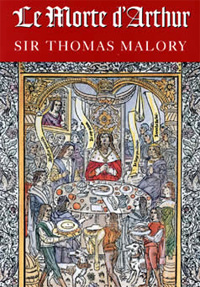
Earlier today, Starz announced their plans for Camelot, a ten-part series that offers a new version of the Arthurian Legend. As someone who studied a great deal of medieval literature in my undergraduate career, even writing my honours thesis on the relationship between the medieval romance (Malory’s Le Morte Darthur) and science fiction (in the form of Battlestar Galactica), this is intriguing to me. I am always happy to see my academic interests crossing into my critical pursuits, and so I am very much looking forward to seeing how Camelot comes together.

However, I first heard this news through Twitter, where the gist was “modern retelling of Arthurian legend” without any further details – Twitter is wonderful, but it’s also vague, so I sought out the press release to get more information. However, when I was reading that press release, a few alarms went off in my head which I feel need to be addressed. First and foremost, Starz claims that this will offer “a wholly original approach to the timeless Arthurian legend,” which is the sort of statement that makes me raise an eyebrow. Shortly after, I discovered the passage that truly makes me apprehensive about this series:

“Camelot” will be based on Thomas Malory’s 15th century book,” Le Morte d’Arthur” – still considered the definitive work on the subject. But that’s only a starting point; “Camelot” will weave authenticity into a modern telling of the Arthur legends that is relatable to contemporary audiences.

What’s funny is that, based on the way this information is being reported, I had presumed that this would be a “contemporization” of the Arthurian Legend, placing it within a 21st century setting similar to how NBC’s Kings transplanted biblical stories into more contemporary political and social structures. However, based on this claim from the press release and the fact that the series will shoot in Ireland, it seems as if the “modern telling” and “contemporary audiences” points refer to the story rather than the setting, which is actually far more problematic for me.

A few years ago, I wrote a paper for a seminar on the Arthurian legend where I investigated the reasons that the most defining qualities of Malory’s Le Morte Darthur (there’s all sorts of disagreement on the spelling, so I just stick with what I know) have never appeared in adaptations of the text. For those who don’t know, Malory’s text is a sprawling tome which has no clear central narrative, which is why no one is crazy enough to try to adapt the book “as is.” However, while some films have claimed to use the text as a source, they do so in a highly selective fashion: rather than trying to capture the essence of the text, which focuses on chivalry and honour within the context of Arthur’s kingdom, they tend to take plot elements and characters and craft a more linear and more “modern” story of love and loss. The paper was fairly short, and unable to cover the breadth of the subject of Arthurian adaptations, but I’ll post it after the jump anyways in case anyone is really interested in the subject at hand.

However, I think Camelot represents the perfect example of the way in which Malory is used within adaptations of the Arthurian legend. They evoke the name because it is, in fact, still considered the definitive work on the subject, which offers the adaptation a certain degree of legitimacy. The problem is that they admit that Malory is just a starting point in the same sentence, and then go on to pretty much state that they are only using Malory for the strands of “authenticity” that they will work into a “modern” and “relatable” tale of, most likely, melodramatic investigations of adultery and heroism, a reductive translation of Malory’s story.

Television as a medium is more capable than film of capturing the qualities which make the Morte a fascinating text, capable of giving attention to the substantial range of characters and even potentially being able to bring stories considered tangential to the “main narrative” to life in ways which are impossible in the more linear model of feature filmmaking. I think if someone really sat down and decided to tackle Malory’s text as a serialized, non-linear narrative, there is the potential for a sprawling and epic investigation of the value of chivalry, honour, kinship and morality within a complex series of events which challenge those values.

However, while HBO’s adaptation of George R.R. Martin’s somewhat-medieval fantasy series A Song of Ice and Fire, Game of Thrones, seems driven by writers focusing on the televisual qualities of the text at hand, it seems like Camelot is being conceived in a way which suggests that there is something about Malory’s text which is emphatically not modern, and which is entirely unrelatable to audiences. As such, it isn’t really an adaptation of Malory at all, but rather an interpretation of Malory’s basic plot – likely focused on the love triangle between Arthur, Lancelot and Guenevere – within a modern context (probably similar to The Tudors, as the projects share some producers).

What emerges may well be an entertaining television series, but I can’t help but feel that it will be missing the point: if you’re going to bring the Arthurian Legend to life in our modern television era, and if you’re going to claim Malory as a source, this is a fantastic opportunity to tackle the elements of the text which made it definitive and have largely been lost in subsequent reimaginings. Instead, their goal seems to be the same old attempt to make something old hip and relevant by ignoring what made it so interesting at the time and instead looking at what is popular or trendy within popular culture – I’d be glad to be proven wrong, but somehow I think that I’m still going to be waiting for the Malorian adaptation that is truly possible in this day and age.

After the jump, my paper entitled “Attempted Screenplay: The Honour of Le Morte Darthur and the Failure of Film Adaptations,” if you want to read more about the unique qualities of Malory’s text that present a challenge to would-be adaptations.

Continue reading

8 Comments

Filed under Camelot

Season Premiere: Breaking Bad – “No Mas”

“No Mas”

March 21st, 2010

“That’s what human beings do – we survive.”

I wrote a fair deal about my reaction to the first two seasons of Breaking Bad on Thursday, about questions of agency and questions of tragedy amidst the show’s complex and fascinating character study. But I knew going into my catchup period with the show that I was, in some ways, watching it “wrong”: this is a highly contemplative show, so I knew I was missing part of the true experience by rushing through Season Two in a four-day period. While the mystery of the pink teddy bear was a long and drawn-out process for some, it was a four day journey for me, and while the show purposefully tries to play with the pressures of time and the challenges that one faces when his or her worst fears are compounded by the temporality of it all I nonetheless felt like I was cheating in some ways.

“No Mas” picks up where “ABQ” left off in terms of displaying the passage of time through the struggle and torment that it creates for these characters. It turns out that the questions that viewers have been mulling since May (or, in my case, since Thursday) were weighing on Walt, Jesse, Skylar and “Flynn” as well, questions that after only a week have started to eat through their attempts to survive this trauma. However, while Walt makes the argument that what human beings do is survive, Walter White’s struggle is that he wants to do more than survive. He wants to live, and he wants to have everything he believed he was fighting for when he cooked his first batch of meth in that RV, and he is forced to decide what he needs to do in order to be able to live with the man he is, even when he seems unsure of just what kind of man he believes himself to be.

In short, Breaking Bad remains an enormously compelling character study, a stunning visual spectacle, and the kind of show that anyone with a love of dramatic television should be watching.

At length, meanwhile, check out some more detailed thoughts after the jump…

Continue reading

2 Comments

Filed under Breaking Bad

30 Rock – “Don Geiss, America and Hope”

“Don Geiss, America and Hope”

March 18th, 2010

I don’t think that “Don Geiss, America and Hope” was a particularly strong 30 Rock episode, but I do think that it was a particularly interesting one. You see, the show displayed three different storytelling methods that it does quite often, each shows both the strengths and weaknesses of the show’s current story model. You have your industry parody (the Comcast buyout of NBC becoming the Kabletown buyout of NBC), you have your celebrity parody (Tracy becoming embroiled in a sex scandal ala Tiger Woods), and then you have the deromanticizing of romantic comedy tropes (Liz’s non-relationship with Wesley Snipes).

In all cases, the show is running into a distinct problem: all of this has happened before, and all of it will happen again, and the show is starting to become weighed down by this fact. There’s plenty of nice one-liners, and I thought all three of the stories worked sort of well at the end of the day, but these are the same types of stories we’ve seen in the past, and when none of them feel particularly revolutionary and they all appear in the same episode, the show becomes messy more than chaotic, which does little to help the show’s consistency problems.

Continue reading

1 Comment

Filed under 30 Rock

The Office – “New Leads”

“New Leads”

March 18th, 2010

Sometimes, a show creates a storyline that has a lot of potential, but then that show tends to choose the least interesting component to follow through with. There’s been a lot of talk about the wasted potential of the Sabre arc on The Office, and I think “New Leads” was far more interesting conceptually than anything relating to Kathy Bates’ guest arc. The idea that the Sabre arrival created new versions of the same old conflicts between Michael and management that we’ve seen in the past was pretty lifeless, while there’s plenty of potential in the new Sabre hierarchy turns the sales team into stuckup jerks and completely destabilizes the office.

While I’m not amongst those writing off this show for its recent missteps, I think it’s sad that they thought the management story was worth a number of episodes while the office hierarchy episode was treated as a wacky stand-alone story. “New Leads” doesn’t quite live up to the potential of this story, failing to earn the character moments it tries to create within the carnage, but it’s at least a sign that they did know the right stories which could emerge within the Sabre arc, even if they didn’t quite know what to do with them.

Continue reading

1 Comment

Filed under The Office

Parks and Recreation – “Park Safety”

“Park Safety”

March 18th, 2010

While Parks and Recreation rarely shows its roots as a spin-off of The Office, emerging instead as a cousin of sorts, I think “Park Safety” was as close as the show has come to feeling like its predecessor. This is, in some ways, a compliment, in that The Office is a show I enjoy, and this was certainly a funny episode of the show.

However, the show went out of its way to create some very specific situations that brought the show more towards broad situational comedy, something that the show has managed to do a bit more subtly in the past. It didn’t end up damaging the episode too much, as those sequences remained funny, but for a show that has been going out of its way to form its own identity there were parts of this week’s episode that made it seem like the production team from The Office had gone into the wrong office for a day. Of course, there were also parts of the episode that dealt with Parks-specific story types, so the Pawnee charm was certainly not lost.

It was just, perhaps, viewed through a slightly different lens, which seemed purposeful in terms of viewing a running joke in a new light.

Continue reading

Leave a comment

Filed under Parks and Recreation

Community – “Beginner Pottery”

“Beginner Pottery”

March 18th, 2010

My lack of knowledge about the Community College system is something that Community takes advantage of quite often: I don’t know if they’re being accurate, but it’s clear that the show isn’t concerned about it. The show wanted to do an episode about “blowoff” classes, and it wanted one of those stories to be about a sailing class being held in a parking lot, so who are we to stop it?

At this point, the cast is gelling enough that just about any story is going to work so long as it doesn’t force the characters too far into a particular mould. “Beginner Pottery” isn’t one of the show’s best efforts from a conceptual standpoint, but its stories are full of either some fun running gags or some strong one-liners that make this a really enjoyable half-hour of television.

Continue reading

1 Comment

Filed under Community

Agency begets Tragedy: Ruminations on Catching Up with AMC’s Breaking Bad

Agency begets Tragedy: AMC’s Breaking Bad

March 18th, 2010

Last night, as Todd VanderWerff and I talked about this year’s Emmy awards on Twitter, he remarked that Breaking Bad will always be held back at the Emmys thanks to its Albuquerque setting – by filming outside of Los Angeles, and outside of more acceptable industry alternatives like Vancouver or New York, the show is alienated with primarily L.A.-based voters. My response to this was to make what, on the surface, seems like a really complimentary comparison: Breaking Bad, in other words, is the new The Wire, another show that by shooting in an off-market city (Baltimore, in the case of The Wire) was never able to get as much respect as it perhaps deserved.

Now that I’ve finished the second season of AMC’s second original series, this comparison is infinitely more interesting than I had imagined it last evening. While I love The Wire, and fell in love (in an entirely non-romantic way, considering the darkness of the show) with Breaking Bad over the past few weeks, the two shows couldn’t be more different in terms of how they represent agency. While The Wire tends to argue that the organizations which govern both sides of the law are inevitably corrupt and fraught with challenges that prevent all but a lucky few from rising above it, Breaking Bad offers Walter White countless opportunities to escape the life he has chosen to live, and at every turn he makes personal decisions that send him further down his dark path.

If I tried to talk about everything I had to say about the first two seasons of the show, I would be writing for days, so instead I’m going to focus on a few elements of the series (many relating to questions of agency) that I thought were particularly effective. If you have yet to watch the series, I can’t recommend it enough if you’re not afraid to watch something that’s morally compromising and unafraid to go to some very dark places – this isn’t a show for everyone, but it’s fantastically well-made, and you can all look forward to reviews of the show’s third season starting on Sunday.

Continue reading

2 Comments

Filed under Breaking Bad





