Monthly Archives: October 2013

Better Without The Bear: How The Cancellation Bear Damages Ratings Culture

CancelBearWantedOver the past year or so, I’ve engaged with what I would call a friendly feud with the Cancellation Bear, the—as far as we know—fictional mascot of ratings site TV By The Numbers. In truth, I have no substantive beef with the Bear or its overlords as individuals, but the Bear and I disagree on a number of issues tied to how ratings are reported and enjoy the occasional repartee. I will admit that it’s a silly thing, filled with wildly exaggerated responses—reflected in this Wanted poster—and certainly among the simpler, more juvenile pleasures one can partake in.

However, over the past year, my feud with @TheCancelBear has been tinged with a degree of legitimate concern for the state of the discourse. Originally, the feud emerged from an ambivalent relationship with the site and its approach to ratings reporting. The site’s role in making ratings data both highly visible and highly accessible makes it a valuable tool for teaching about and researching the television industry, but the Cancellation Bear represents the site’s other role: actively inciting fear and uncertainty among fans of series struggling in the ratings in an effort to both drive traffic and—especially in the past two years—crusade against what they see as “fan excuses” that have no traction compared to their sure-fire prognostications. The former has helped make it possible for a “ratings culture” to exist; the latter has made that “ratings culture” unnecessarily combative and unpleasant.

This ambivalence resulted in a rather epic conversation myself and Tyler Dinucci had with a representative of the site last year. Based on a consideration of Last Resort’s ratings, the conversation wasn’t really about the fate of Last Resort (and I’m not just saying that because I was on the side of optimism and the series was canceled after 13 episodes). The conversation was actually about how TV By The Numbers frames its analysis of ratings not simply as good on its own merits, but rather uses the Cancellation Bear as a front behind which it can insult “desperate fans” who would choose to look on the bright side.

More troll-like than ursine, the Cancellation Bear is the site’s Id, framing the site’s largely measured—and unquestionably educated—predictions through the contempt the site’s creators seem to have for many of their readers and fellow reporters/journalists; it’s a frame that risks turning TV By The Numbers into a disruptive force within ratings culture, more interested in loudly performing its distinction than participating in a meaningful discourse central to TV’s future.

Continue reading

20 Comments

Filed under Ratings

Cultural Interview: Awkward. Creator Lauren Iungerich on “Surprise!” and S3

IungerichPhotoWhen Awkward. closed the first half of the third season earlier this year, it was with the promise of ten more episodes to debut this fall. Around the same time, however, we learned those ten episodes would be the final ones for creator Lauren Iungerich, who left the show to explore other opportunities.

I’ve been covering the show for The A.V. Club since mid-way through its first season, and Iungerich has been kind enough to drop into the comments and engage with viewers on occasion (and has already weighed in on some of the comments on my review of “Surprise!”, tonight’s premiere).

Having spoken to Lauren about the show ahead of its second season here at Cultural Learnings, I got in touch with her this week to get some perspective on “Surprise!” and the final ten episodes as we march toward her “series finale.” Schedules permitting, my goal is to have a few of these conversations throughout the season to get further perspective, likely with a more retrospective interview to follow later in the year.

In the meantime, some Q&A on “Surprise!”, Jenna as—a sort of—anti-hero, and Season 3’s arc as a whole:

Continue reading

5 Comments

Filed under Awkward.

Why The Homeland Twist Works [For Me] [Mostly] [Okay, Barely]

HomelandTitle

“Game On”

October 20th, 2013

Last year, The New Yorker’s Emily Nussbaum had a theory about Homeland. She argued that Sgt. Nicholas Brody’s panicked communications with Abu Nazir as Carrie Mathison was held hostage were all an act, and that he was in on the plan from the beginning.

It was an interesting theory, one she gave me credit for partially debunking by noting that Abu Nazir and Brody continue speaking in the same manner once Carrie is no longer listening to their conversation. For me, that was the sign that the theory couldn’t work: while an interesting idea, I did not believe Homeland was a series that would so actively mislead the viewer with information that—in hindsight—would contradict the intended truth of the situation.

If you saw last night’s episode of Homeland, and have been following some of the subsequent conversation, the above may sound familiar. Indeed, this season’s central storyline almost feels inspired by Nussbaum’s theory, as though the writers took it as a challenge as to whether the series could sustain a twist that in retrospect contradicts many of the storylines and character actions displayed in earlier episodes and maintain its reputation.

The response to “Game On” suggests that they can’t, but that doesn’t necessarily mean I’m no longer on board.

Continue reading

2 Comments

Filed under Homeland

Homeland – “Tower of David”

HomelandTitle

“Tower of David”

October 13th, 2013

It’s been a few months since I watched the first two episodes of Homeland‘s third season. They were made available to press ahead of the show’s panel at the Television Critics Association press tour, which was logical—in that it allowed those in attendance to ask informed questions rather than random guesswork—but also daring. It was daring because in the two episodes screened for critics, Nicholas Brody did not appear for even a brief sequence, and yet Damian Lewis was seated on the panel at the Beverly Hilton.

I tweeted in advance of that panel that I was interested to see how the room responded to this (among other facts about Homeland‘s third season, specifically the increased focus on Morgan Saylor’s Dana), but Showtime was quick to offer clarification: a trailer revealed early footage of Brody’s first appearance in “Tower of David,” and the panel confirmed he would return in the very next episode beyond the ones we had seen. Part of me had expected them to treat Brody’s return as a surprise, leaving his fate open-ended, but from the beginning Brody was something the series was very open about, creating a certain suspense to see how the show planned on reintegrating the character into the narrative.

“Tower of David” works as a structural exercise in character development, drawing a parallel between Brody and Carrie’s respective prisons. However, it fails to acknowledge and mitigate the issues that plagued the two characters’ development last season, leaving an episode that works up until the point you look into the past rather than the present/future.

Continue reading

1 Comment

Filed under Homeland

Interview: Hell On Wheels Showrunner John Wirth

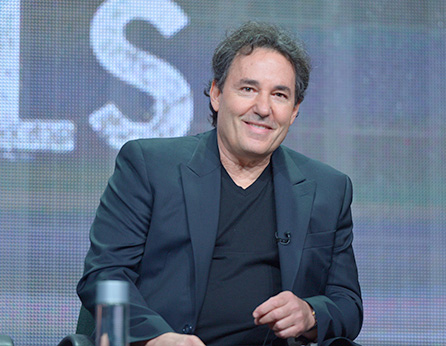
JohnWirthWhen veteran writer/producer John Wirth took over as showrunner on AMC’s Hell on Wheels, it was a somewhat strangely public process. John Shiban, the showrunner for the show’s first two seasons, backed out unexpectedly after the series was renewed, leading AMC to make the series’ pickup contingent on finding a new showrunner. With series creators Joe and Tony Gayton departing as well, Wirth stepped into a series with established characters, existing storylines, and more or less complete creative freedom to take the show in whatever direction he desired.

That direction has made the show a strange sort of success story for AMC, shuffled off to the prestige-less refuge of Saturday nights where it’s been quietly outperforming expectations (see Kate Aurthur’s report at Buzzfeed for more). It concludes its third season tonight at 9/8c on AMC with the expectation that it has earned a fourth season, and having successfully transitioned from a slightly underperforming prestige AMC drama to a successful translation of their film western audience into original programming on a normally dead night.

At July’s TCA Press Tour before the season premiered, I had a chance to talk to Wirth about his perspective on showrunning, how he came to be involved with Hell on Wheels, his planned use of social media (which I’ll be reflecting on soon elsewhere), and how—despite the strange circumstances—Hell On Wheels marks a meaningful period in his career as a showrunner-for-hire.

This is far from your first time serving as showrunner on a series; in fact, the Internet suggests you were part of a “Showrunner Training Program” at some point? How do you train someone to be a showrunner?

JW: I put together a committee of writer-producer-showrunner types. We did a small book called A Television Writers’ Handbook. And it was the first time in the history of the Writers’ Guild that anybody had codified what it is to work on a TV show and what the various positions are and what’s expected of you when you’re in those positions. And we had a big chapter on showrunners, and how to behave as a showrunner, and so forth.

Out of that, Jeff Melvoin—who I had asked to be a part of that committee—had the idea: is this something we could teach? And I didn’t believe that it was, and he believed that it was. He said “I’m going to try to put together this program, will you work on it with me? “And I said sure, but I don’t want to be in charge—this little book we did took five years, and I thought it would take a couple months.

We put together the Showrunner Training Program, which has been enormously successful. I still don’t believe you can teach someone to be a showrunner, but you can expose them to the things they’re going to experience when they are showrunners. That’s really the goal of that program, to let people know what it is they’re going to be experiencing when they get that job.

What’s that job like?

The job itself is ridiculous. You’re the hardest working man or woman in show business – the hours are incredible, you have to be a writer/producer and manager, you have to manage up down and sideways, you have to be a priest, you have to be a magician, you have to be a wife – it’s nutty.

So why you do you think AMC came to you to fill that job on Hell on Wheels?

JW: I think they got to the Ws in their rolodex and were like “Damnit!” Who’s after this guy? We’d better like him. Continue reading

2 Comments

Filed under Interviews