
Tag Archives: Review

Series Finale, Part One: Doctor Who – “The Pandorica Opens”

“The Pandorica Opens”

June 19th, 2010

As a newcomer to Doctor Who, one of the challenges I’ve had to face in terms of writing about the series is what to do with its two-part episodes. In particular, there’s a distinct challenge with writing about the first part of those episodes, as Doctor Who tends to quite literally split narratives in half as opposed to telling two connected stories. As a result, the first half tends to be fairly heavy on exposition and setup before the second half brings it all to a resolution: while this means that there is plenty to speculate on about the first episode, it’s tough to offer a critical opinion when so much of the two-parter’s effectiveness depends on how it concludes.

[Note: this seems as good a time as any to link to Scott Tobias and Noel Murray’s fantastic conversation about the challenges of writing about television at The A.V. Club – I’d add “two-parters” to their list of confounding situations for television critics who write about television on a weekly schedule, although they are not particularly common in this day and age.]

I’ve gotten away with it so far this season by either writing about episodes from previous series (catching up with the Weeping Angels and River Song in my review of “The Time of Angels”) or catching up on previous episodes in this series (lumping reviews of “Vampires of Venice” and “Amy’s Choice” in with “The Hungry Earth”), but with “The Pandorica Opens” (the first part of the series finale) I knew that there was no such cheat available, which meant that the episode was either going to lend itself to instant analysis or it wasn’t.

There are times when I write about episodes of television because I feel I have something to say, or because I want to start or continue a conversation, but there are other times when I simply feel as if I need to write about something so as to be able to even come close to being able to wrap my head around it. “The Pandorica Opens” is one such episode, a first-part which wastes no time drawing a clear (and quite ingenious) connection between this story and the ongoing series narrative and in the process leaves me enormously confused in the best possible way.

Continue reading

15 Comments

Filed under Doctor Who

Cultural Catchup Project: New Beginnings in “The Freshman” and “City Of” (Buffy and Angel)

New Beginnings in “The Freshman” and “City Of”

June 19th, 2010

You can follow along with the Cultural Catchup Project by following me on Twitter (@Memles), by subscribing to the category’s feed, or by bookmarking the Cultural Catchup Project page where I’ll be posting a link to each installment.

It’s only fitting that, as Buffy and Angel’s paths diverge into two separate series, the Cultural Catchup Project forces them back together for the sake of analysis.

There is no plot-based connection between “The Freshman,” Buffy’s fourth season premiere, and “City Of,” Angel’s “pilot” of sorts which started off its first season: while there is a brief moment shared between the two episodes, it is an easter egg more than a substantial development. However, both episodes tell more or less the same story: our protagonist moves onto a new stage in their life in an unfamiliar location and struggles to reconcile their past life with their present situation.

In that sense, both episodes serve the function of a pilot: while “The Freshman” isn’t debuting a new series, it is ushering in a new era for Buffy, as she heads down the road to UC Sunnydale and discovers that it is truly a “whole new world” in more ways than she bargained for. And “City Of,” while unique in that Buffy viewers have a greater understanding of Angel and Cordelia’s characters than those tuning in for the first time, still needs to introduce Angel’s current goals and set up just what kind of show Angel wants to be.

And while both episodes were entertaining, I’m going to make the argument that neither of them were actually that successful when considered as the beginning of their respective seasons.

Continue reading

82 Comments

Filed under Cultural Catchup Project

Rumination vs. Revelation: Pixar, the Remarkable, and Toy Story 3

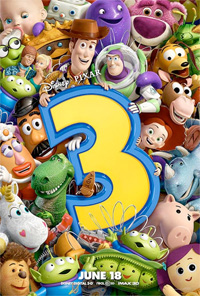
It’s not often I write about movies in this neck of the woods, but it’s hard not to use Cultural Learnings as an outlet for my thoughts about Toy Story 3. Not only is this a Pixar film, but it’s a Pixar film which deliberately taps into my childhood nostalgia: I was 9 when Toy Story was released, and 13 when Toy Story 2 hit theatres, so this is arriving at a time when that sort of nostalgia is both most welcome and most intellectually stimulating (as I’m considering culture and the media I consume in a much more critical fashion than I was back then).

Toy Story 3 is a solid sequel to the second film, and a wonderful conclusion to the cinematic trilogy, but I personally feel as if it is the least successful (relatively speaking, of course) of the three films when separated from our nostalgia and the emotional resonance the series has accrued over time. Whereas there are moments in this film which are more powerful than those which came before, and Pixar continues to separate itself from the pack by tapping into the audience’s emotional connection with this franchise in a fashion which has eluded Dreamworks with Shrek, Toy Story 3 is the first in the trilogy to feel repetitive, albeit in a purposeful fashion designed to emphasize key themes from the second film which become more complex in the context of the third.

Considering this is Pixar, they pick the right themes and execute them to perfection when the time comes to bring the series to its cinematic close, but there is a lack of discovery within the film’s adventure, establishing it as an extremely engaging rumination more than a revelation – what will follow is my attempt to explain why I’m not head over heels in love with the film as a whole even after being head over heels in love with its conclusion.

[I went a few paragraphs without any major spoilers, but then I sort of throw all caution to the wind, so if you haven’t seen the movie yet I’d suggest bookmarking this until then, and you’ll have something to read after getting back from the theatre.]

Continue reading

6 Comments

Filed under Cinema

Sneak Preview: Rubicon – “Gone in the Teeth”

“Gone in the Teeth”

June 13th, 2010

AMC has officially dubbed their airing of Rubicon’s pilot a month and a half ahead of its premiere as a “sneak preview,” but I think a “teaser trailer” may be a more accurate description of the episode in question. A good teaser trailer shows you atmospheric scenes which give you a sense of the mood a particular movie or television series is going for, but really doesn’t tell you much about the plot in question: for example, HBO’s teaser trailer for Game of Thrones, the much-anticipated adaptation of George R.R. Martin’s A Song of Ice and Fire, shows a few key images and establishes the series’ tagline.

Considering this, it’s fair to say that my use of the designation for “Gone in the Teeth” is symptomatic of my frustration with the enigmatic lack of clarity which pervades this series. If a show’s pilot is supposed to be a teaser trailer, an aesthetic exercise designed to build hype, then I would consider this to be moderately successful: there was absolutely nothing here which would keep me from tuning into the series in August. However, a pilot needs to be something more than a teaser trailer, and the series’ shortcuts in establishing both its central character and its central conspiracy show a lack of elegance which does little to convince me that this belongs in the same breath as AMC’s other original series.

Continue reading

6 Comments

Filed under Rubicon

Season Finale: Justified – “Bulletville”

“Bulletville”

June 8th, 2010

I think an “I told you so” is in order (albeit a little bit late, as I didn’t get to the finale until this weekend).

I wrote at length earlier this spring about how Justified’s gradual serialization was nothing to be alarmed about, and could actually result in a stronger serialized core to the series by allowing us to spend time with the characters outside of the demands of long-term storylines, and “Bulletville” is the definitive example of the complexities of this form of narrative pleasure (or the pleasure of this narrative complexity – works either way).

Perhaps the best way to describe it is a sort of abstract serialization: while there are parts of the narrative which present clear actions and consequences, there are others which build on small moments, actions which have no immediate ramifications but which at some point in the story merge with serialized arcs and contribute to a meaningful image of setting or character.

In its first season finale, Justified did everything they needed to do to bring it all together: in fact, there was so many moving pieces here that parts of the series which one would have presumed to be central in a finale like this one (especially if the show were as generic a procedural as some presumed it to be) were left to small moments, actions within a larger whole, leaving “Bulletville” to mirror the events of the series’ pilot but with newfound, and pretty fantastic, complexity.

Continue reading

4 Comments

Filed under Justified

Season Finale: Breaking Bad – “Full Measure”

“Full Measure”

June 13th, 2010

“We had a good run…but it’s over.”

When I sat down at about 3:00 am last night to watch the Breaking Bad finale after arriving home from my trip to Madison, I discovered that AMC was showing “Shut the Door. Have a Seat,” Mad Men’s third season finale. It took me a good ten minutes before I managed to turn on my recording of “Full Measure.” There is something exhilarating about that finale, something immensely pleasurable as lingering storylines that were sort of floating their way through the season (Lane’s dissatisfaction, Joan’s marginalization, etc.) become wrapped up in an unforgettable heist narrative which launches the show in a fascinating new direction.

And as I sit down the next day to consider “Full Measure,” I can’t help but make some comparisons, although less in terms of quality (both are great, we don’t need to qualify which is “better”) and more in terms of structure. “Full Measure” is similar to “Shut the Door…” in that it shows our protagonists struggling to respond to a new set of circumstances which threaten them in some capacity, but the world of Mad Men values creativity first and foremost, something which Breaking Bad tends to oppress (as we see with Jesse as the paralyzed artist figure, his youthful drawings or woodcraft projects signs of wasted potential). So while Don and Co. got out of their situation with some creative thinking, and the series found its finale in contrasting the creation of a new direction while simultaneously dissolving another, Walt and Jesse solve their circumstances with a cold dose of reality, and the series finds its finale in doing as it has always done: following through on the social, psychological, and monumental consequences of going down this dangerous path.

The result is a fairly simple tragedy with less than simple ramifications, as “Full Measure” uses the show’s trademark tension to cap off a stunning season of television which went on a run that is most certainly not over as the series heads towards its fourth season with an obnoxious amount of momentum.

Continue reading

5 Comments

Filed under Breaking Bad

Season Finale: Glee – “Journey”

“Journey”

June 8th, 2010

“Life only really has one beginning and one end – the rest is just a whole lot of middle.”

In his attempts to inspire his Glee Club to achieve despite the nearly insurmountable odds placed before them at the upcoming Regional championships, Will Schuester makes the above remarks. And while I don’t think this was intentional, there’s a wonderful meta-commentary about the show itself in this statement: sure, the fragmented nature of the first season means that there were really two beginnings and two endings, but at the end of the day everything else was just a whole lot of middle that was more middling than I would have desired.

But if the back nine of Glee’s first season saw the series flipping and flailing wildly as it flew through the air, “Journey” demonstrates that this series knows how to stick a landing; in fact, I’d go so far as to say that the show would be amongst television’s best if they did two-episode seasons made up entirely of premieres and finales. Sure, the episode more or less feels like “Sectionals 2: Electric Bugaloo,” following the same patterns as the fall finale, but there is an unabashed sincerity to its storytelling which remains grounded without having to be undercut at every turn. It makes the show feel like it has earned this blanket sentimentality, that it truly has taken these characters on a journey which has changed their lives.

Matt Zoller Seitz wrote a great essay earlier today about Glee’s radical sincerity, but when I think about it nothing about “Journey” felt radical: so embodying the resiliency of the series’ spirit, and unapologetically engaging in theatrics we might have rolled our eyes at just a year ago, Glee proves that even considering all of the hype and success there remains a confident, passionate, absolutely entertaining series about a glee club that, gosh darn it, refuses to stop believing in itself.

And while I’m still going to dock the series some points for its poor form in the air during its back nine, I’m willing to throw up a good 9.5 or so for its landing, as “Journey” is unquestionably a series high point.

Continue reading

19 Comments

Filed under Glee

Season Finale: United States of Tara – “From This Day Forward”

“From This Day Forward”

June 7th, 2010

I wish that I had more to say about United States of Tara’s second season finale, but for the most part I don’t. This is not to say that the episode wasn’t enjoyable, or well-acted, but rather it seemed that the show had more or less choreographed all of its reveals, and so the primary function of “From This Day Forward” was more or less appearing to reset things to the status quo.

Again, this isn’t a slight on the episode: with some strong performances and some intense emotional moments, I think the series nicely capped off a complex and intriguing second season. The problem is that it works a little bit too hard to get to the point where the Gregson family is dancing wistfully in a beautifully lit backyard, cutting away the clutter of their lives for that brief moment of bliss. I understand the impulse behind that action, and the catharsis of the episode is helped by the calmness of those final moments, but it seems to be putting a button on too many story points which went unresolved or were cast aside with remaining potential. The series kept hinting at hidden motivations or long-kept secrets, and yet after revealing the biggest secret of them all the rest were sort of just chalked up to either misdrection or the frakked up nature of the Gregson family.

There’s something about that which is just a bit too easy, and something which all the catharsis in the world isn’t going to fix, and I feel like the finale needed to acknowledge that just a little bit more.

Continue reading

6 Comments

Filed under United States of Tara

Cultural Catchup Project: “Graduation Day” (Buffy the Vampire Slayer)

“Graduation Day”

June 7th, 2010

You can follow along with the Cultural Catchup Project by following me on Twitter (@Memles), by subscribing to the category’s feed, or by bookmarking the Cultural Catchup Project page where I’ll be posting a link to each installment.

“The Future is Ours”

In many ways, “Graduation Day” is a story simply told.

Filled to the brim with shared anxieties and common goals, the two-part season finale is almost claustrophobic in its focus on how our central characters respond to the circumstances which are threatening to change their lives forever. Conveniently conflating graduation and ascension, the series uses the end of the world as a way to exaggerate (within reason) the fear of the future, the uncertainty which defines high school students as they prepare to enter the real world.

As two hours of television, it’s a densely plotted rollercoaster which operates in carefully designed half measures which create conflict and chaos without losing sight of the psychological ramifications within the episode’s action; as the conclusion of Buffy’s finest season to date, it’s a reminder of the ways in which the series has forever blurred the line between human and demon to the point where empathy is no longer a one-way street, uniting the series in a way that it may never be able to achieve again.

Continue reading

123 Comments

Filed under Cultural Catchup Project

Breaking Bad – “Half Measures”

“Half Measures”

June 6th, 2010

“You are not a murderer – you’re not, and I’m not. It’s as simple as that.”

If I had been drinking something when Walt said the above line, I’m pretty sure I would have done a spit take.

This reaction comes for two different reasons. The first is the idea that Walt is not a murderer, which seems patently false when you consider the numerous people he’s killed (whether it’s not saving Jane or the two men who he killed as a result of the meth lab explosion in the pilot). However, that’s part of Walt’s character, his ability to convince himself that it doesn’t make you a murderer if you kill them for the right reasons, just as it doesn’t make you a criminal if you’re doing it for your family. And so I can understand that this is part of Walt’s self-delusion, and so my spit take is perhaps unwarranted.

However, even if we accept that Walt believes that his past actions do not define him as a murderer, his argument that it is “as simple as that” is laughable to the point of a solid guffaw. Breaking Bad is many things, but simple is not one of them, and while Walt has his delusions he should know by now that things are never quite that simple. It’s one thing to try to justify your behaviour through rationalization, and it is quite another to try to convince yourself that your world of meth cooking, money laundering, revenge seeking and turf wars is in any way simple, or that anyone is capable of maintaining a simple life when you’re caught up in that world.

And yet, in some ways I think “Half Measures” proved my guffaws to be misguided: while Walt’s first claim may remain laughable, his latter claim may not be so farfetched, his desire for simplicity ultimately futile and yet the only way he can think to respond to the complexity of his current situation. The result is a blunt, even simple, action with enormously complex consequences for Walt, Jesse, and the series’ narrative, the exact kind of bold move which has elevated the show to the upper echelon of television drama.

Continue reading

10 Comments

Filed under Breaking Bad


